Anger Management

Illustration: Ben Jennings/The Guardian

There is this re-frame I heard the other day, about anger, which I quite like. It goes something along the lines of: when someone does something that makes you angry, it’s not that person who has made you angry, it’s you.

Sure, you think, it’s my anger. I’m the reason it exists in the first place, and I am the only one who can control it. Others around me, or the surrounding environment, can influence the extent to which I amplify up the feeling of anger, or dial down that feeling. However, it really is all on me, I suppose, when it comes to why the anger is even there in the first place.

Right, says the other side of this coin. But, if you followed that approach ALL THE TIME, then you run the risk of encouraging, or incentivizing even, people to behave in a way that could very well be poorly judged. Rather than suppress your anger, you should challenge what they have said or done, and seek to influence that, in what you perceive to be a positive way.

OK, but then we’re relying on everyone agreeing on certain morals, behaviours, ethics and perspectives, and across numerous topics, aren’t we? If we are to assume that confronting one another, with reasoned argument, to pacify a situation, is the best solution, we will surely go round in circles trying to agree, and likely infuriate each other, only to then, ironically, exacerbate and increase anger amongst more rather than less people?

And so on.

At this point, of course, we could digress about freedom of speech, about a country’s laws which lay down “right” and “wrong” as well as further tangents (which could even take us into discussions about how folklore, and now our modern day “Marvel” adventure-stereotypes, teach us about “right” and “wrong”, and about “good” and “evil”.)

Instead, something on cultural norms…

Here in Vietnam, as I may have mentioned a few times in the past 13 years, it is frowned upon to display anger, especially in public. Of course, it is not illegal to be angry but it is rarer than in other cultures to see people displaying anger. I have witnessed some heated rows in the street, and I’ve openly argued with many people here. I’ve been angry, they’ve been angry. It hasn’t been pretty.

Generally, though, once you raise your voice to another person in Vietnam, you have lost any argument you might be legitimately trying to make (in which case, and at last count, I am down about 25-0 in terms of losing arguments.)

So, let’s hear from the poet David Whyte, who describes anger in his book, Consolations, as follows:

ANGER is the deepest form of compassion, for another, for the world, for the self, for a life, for the body, for a family and for all our ideals, all vulnerable and all, possibly about to be hurt. Stripped of physical imprisonment and violent reaction, anger is the purest form of care, the internal living flame of anger always illuminates what we belong to, what we wish to protect and what we are willing to hazard ourselves for. What we usually call anger is only what is left of its essence when we are overwhelmed by its accompanying vulnerability, when it reaches the lost surface of our mind or our body’s incapacity to hold it, or when it touches the limits of our understanding. What we name as anger is actually only the incoherent physical incapacity to sustain this deep form of care in our outer daily life; the unwillingness to be large enough and generous enough to hold what we love helplessly in our bodies or our mind with the clarity and breadth of our whole being.

When I first read Whyte’s book in 2017, and he referred to anger as an ‘incoherent physical incapacity to sustain this deep form of care’, I hadn’t read any description about anger like that, prior to that. It was mesmerizing (the whole book is the same). The writer Brené Brown, similarly, also claimed anger to be “the violent outer response to our own inner powerlessness”. I like this, too. Brown’s idea being that, when we are angry, we are acknowledging this powerlessness, and our own sense of there being something deeply wrong and vulnerable about being so powerless.

It’s of no coincidence, perhaps, that I find myself back here after 5 months, talking about anger, given the visceral and constant nature of how we receive information 24/7. The many stories, quotes, videos and pictures – harrowing and uplifting – shared by so many people around the world, plastered across global and social media channels, is both overwhelming and awe-inspiring. And so much of it is, particularly these past two weeks since news broke of the conflict in Gaza and Israel, anger-inducing.

It can be of little surprise, too, that, like many of you I’d wager, my attention span for new content and dopamine inducing click-baitable fixes, is forever reaching new and bleaker low-levels.

How much content and communication is too much?

Many people reminisce about the happier times, prior to the internet, and before the rise of social media. Anger was around then, also. But was it tempered at all, compared to today? I don’t think we can really know, nor that it would make any difference, when looking at how to manage our emotional responses to things in the future.

I do believe that that phrase – “it won’t make any difference” – also happens to be one of the scourges of, at the very least, my generation (GEN X, in case that is significant at all) when it comes to numerous societal issues: politics, climate change, equality etc.

Now, I vote, and I’ve marched for causes. I sign petitions, I blog about some of these topics. I feel that all actions have an impact of sorts, however minor.

Do I think my contributions will make any actual difference? Not really. But that would never be a reason not to write again, or to vote, march, campaign, argue, debate, influence, and so on. In my estimations, it is the combination of having purpose and responsibility in one’s life which can be palpably important to the way one feels each night, when closing your eyes and trying to find sleep. So, “keep on keeping on” then? Even if it’s for your own sustenance? Maybe.

I do believe, though, that there is a healthy correlation with that particular combination (responsibility and purpose) along with one’s tendency to allow kindness to guide your decisions. Whether this is the form of kindness that, as the phrase goes, requires you to be “cruel to be kind” or, alternatively, is kindness deployed in order to offset your anger, through acts of kindness, isn’t perhaps strictly important.

Like the cadence one finds in any pursuit that necessitates repetition and deploys a form of physicality (internally or externally) it is perhaps the practice which does, in the end, make perfect.

So, I think we need decent amounts of time to practice how to feel and to competently manage these emotions – kindness and anger, for starters – and that takes longer than anyone is prepared to admit. A lifetime even (although I think you can target at least ‘middle-age’ for decent enough proficiency.)

To close out, I’ll finish back where this started, a simple re-framing exercise. Can it work?

When you read tomorrow’s headlines, recounting the day’s horrors unfolding in the Middle East, how does one find a way forward, emotionally? How do you perform your own triaging service to yourself, in a way that caters to both your anger and your anguish? Being angry in that moment, and sustaining that anger is arguably more appropriate – surely – than allowing it to dissipate? Or, instead, turning that energy towards something else, something which gives you purpose and responsibility – even just in the tiniest of moments – could be said to be much more ‘impactful’ and worth making happen.

Do these formulas work for when, later the same day, someone cuts in line in front of you, and you feel the red mist enveloping? Arguably, as we are often reminded, it’s important to put perspective on things. To be “thankful for what we have” in that moment, when we want to kick out at someone, or at something.

Anger is a primary emotion, you can dilute it, and you can embolden it but, mechanically, it is simply one thing, one feeling.

So, the question should be: how do we learn to manage our anger?

And the answer to that is, I would argue, up to you, and no one else.

Auspicious Times in Sri Lanka

Touching down at Bandaranaike airport in Colombo, Sri Lanka, late last Saturday, for the first time in over three years, my uber driver cruised down the highway and straight into the country’s annual Vesak celebrations.

It was after midnight, and my hotel was just a few kilometers away, but we weren’t moving anywhere.

Children with their heads stuck out of car sunroofs, beaming in glitter masks, young men and women excitedly hopping between the traffic on their scooters, lines of people queuing up to sample free cardamon tea and pastry snacks, prepared by this proud local urban community – united, in finally hosting a festival that had been de-railed for the previous four years in a row.

2023 Vesak was jump starting a country that has faced some of the worst crises since peace broke out in 2009: the Easter terrorist attacks in 2019; the protracted fallout from the COVID-19 pandemic; the country’s subsequent economic downturn and fuel crisis. Sri Lanka has endured all of these things and yet, into the early hours of Sunday morning, its citizens were resolute in their celebrations, bringing the traffic to a joyful standstill.

I was simply delighted to be once more back on the island. Readers of this blog will know a little about my mini obsession with the country and in spite of the recent turmoil in Sri Lanka, I’ve kept my ties these past few years mainly through my commitment as a Board Member to Chrysalis, and to their immaculate work in support of women and youth. Time with their team last week reinvigorated me, their ongoing innovation and commitment to social change is second to none.

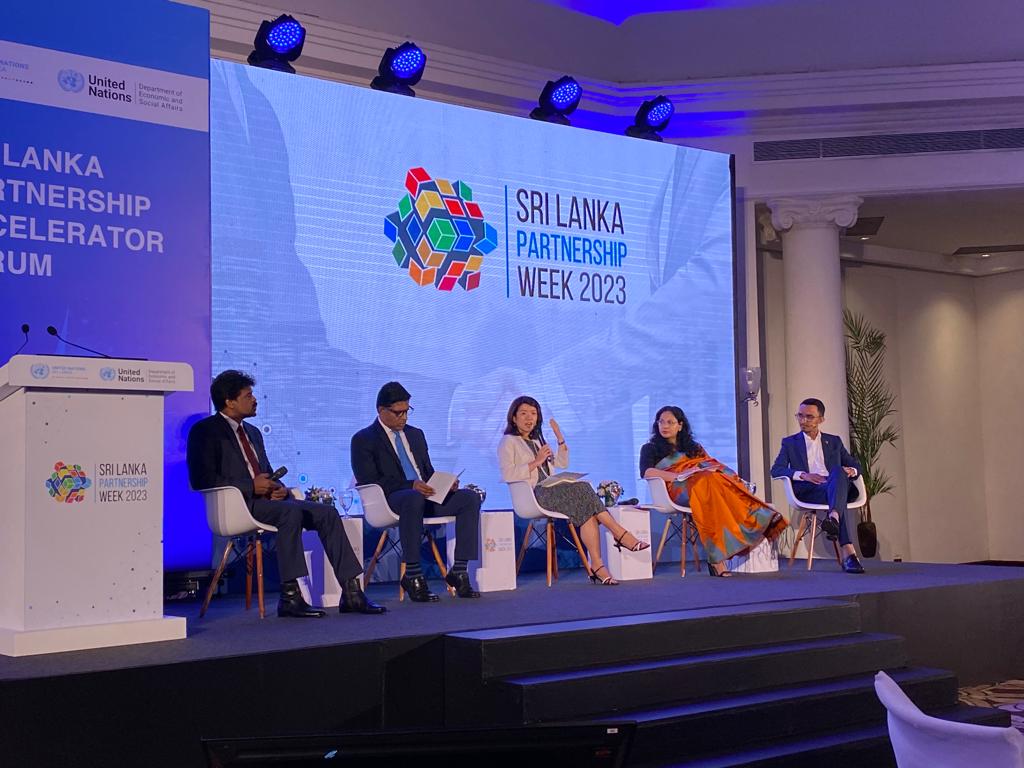
On Monday, the Chrysalis CEO, Ashika Gunasena, and I attended a high-level Forum hosted by UN Sri Lanka and UNDESA (the United Nation’s department for Environment and Social Affairs).

The event kicked off a week of training events and discussions, on the part of the UN’s various agencies in the country, about the power of partnerships.

One hundred guests attended the opening Forum and heard a rallying call to action from a range of groups, representing not just the UN but civil society, the private sector and academia.

The central tenet was simple: it is imperative to embrace multi-stakeholder partnerships as a means to address the country’s societal issues. Speaker after speaker echoed this sentiment. Each taking turns to amplify the reality that it can only be in working together, and across all sectors, that the country might overcome its current social and environmental crises.

Like Vesak, it felt like an auspicious time to be back in Sri Lanka. A turning point, perhaps, for a country grappling with how best to move its economy and its society forward.

Audience members voiced concerns about trust and transparency between sectors seeking to collaborate and, at times, the Forum struck a more somber tone. However, overall, there was a sense optimism and a shared determination that the country simply cannot risk falling further behind economically.

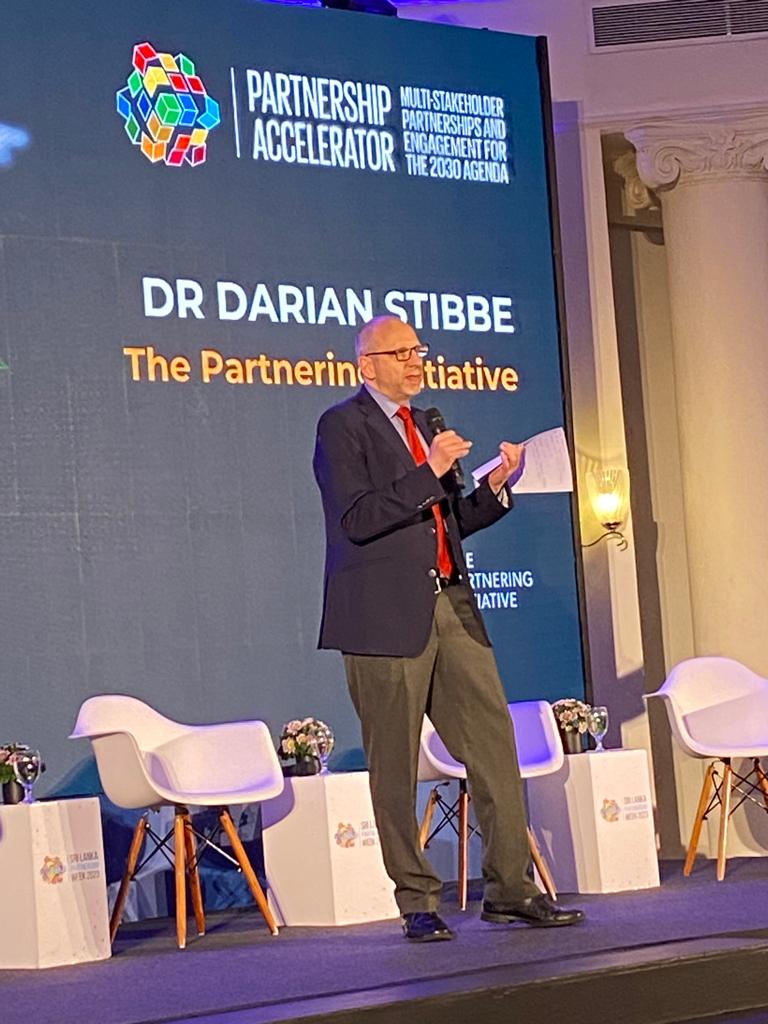
As an Associate of The Partnering Initiative, I attended the full ‘Partnerships Week’ in a training capacity, joining TPI’s Founder, Darian Stibbe, in the facilitation of a 4-day set of modules on partnering, in collaboration with UNDESA.

The course is known as the Partnership Accelerator, and is designed to offer training on partnership fundamentals, as well as share learning about more complex partnering issues and troubleshooting for when things go awry, as they can often do.

The first half of our week was spent with almost 50 participants, drawn predominantly from across UN and Government departments. This was followed by a second two days of “Training of the Trainers” where we worked with 15 colleagues assigned to take forward the partnership curriculum to their teams, and to their partners.

The concept of creating both the momentum for partnering, as well as strengthening the requisite skills for organisations using this approach, means that, over time, an exponential number of colleagues become empowered to better leverage partnerships to the best effect.

This is the second TPI Partnership Accelerator I’ve delivered, and the course is highly effective.

The content is finely tuned from TPI’s 20 years of experience in designing and managing capacity building courses like this one. We offer theory, we share frameworks. There are case studies to dissect, and TPI tools to utilise. All as you would expect.

The extra ingredient, that makes the sessions so rewarding, are the participants themselves.

Unlike some training courses, the participants do not get a lot of time sat listening to power-point slides. Instead, they are up on their feet designing role plays, performing sketches in front of their colleagues, creating real life scenarios where they can experiment with such things as ‘how to build trust’, or ‘how to overcome power imbalances’ – two typical characteristics that many multi-stakeholder partnerships face.

These group performances are fun and energetic, and this helps create solid conditions for learning.

With emails piling up in participants’ in-boxes, and some being summoned to urgent, last minute government meetings, it was a testament to our teams last week that so much of their energy to learn, and to collaborate with one another, were still at high levels by the closing sessions on Friday.

Their curiosities for how to transfer new knowledge into their work was piqued throughout the 4 days and it was a true privilege to work alongside so many committed and creative colleagues.

If these are, indeed, auspicious times for the country, then I returned home feeling more than just a flicker of excitement about how these times might yet be positively shaped, by some of those in the room with us last week.

Some Might Say

I was on a kibbutz in August 1996, milking cows at four in the morning and hiding out in our bomb-shelter-turned-bar of an evening, drinking vodka and smoking ‘noblesse’ cigarettes, that constituted the sum total of our weekly purchases, with the 50 shekels we volunteers earnt each month.

Over at Knebworth, not that far away from where I’d grown up in the UK, the most famous band in the world at the time, Oasis, kicked off a two-day concert, attended by 250,000 people.

I watched the documentary, about this historical spectacle, earlier this week, and have spent all morning, so far, transfixed by the album produced from that weekend.

There is a mesmerizing nature to the documentary itself. Not least because it re-kindled, for me, many teenage memories. From the hours sat in my bedroom, live taping off the radio, to the ordeal of dialing up for concert tickets (in an era pre-internet, pre-social media), to the songs themselves – enduring anthems that followed me from school to university, and which give me goosebumps even now.

A year after this concert, Tony Blair’s ‘New Labour’ administration took office, to a euphoric fanfare of support from huge swathes of the country, speaking out against the long bout of Conservative rule.

Regardless of your political or musical persuasions (Tony Blair’s tenure was fairly topsy turvy, and Blur were a pretty decent band in the 1990s, too) it feels, 26 years on, that the UK is in need of a seminal moment, similar to Oasis‘ Knebworth weekend.

A 2022 version of what that Knebworth concert encapsulated, would do everyone very well at the moment: the regaining of dignity it might kindle, perhaps; the coming together of people, collectively exhausted from another long stretch of Tory reign.

Bring it on.

I’m yet to read anything that points to anything positive that has come from the 2016 Brexit referendum. I do alter my news feeds as much as possible and so, of course, I could find positive commentaries about Brexit out there easily enough.

Thing is, I am not convinced by any of them.

It is from that particular moment, back in the summer of 2016, that I believe today’s current crises have manifested.

A “complete disaster” are the words a dear friend of mine used, only yesterday, when reflecting on the trials and tribulations of living in the UK these last 6 years, as someone originally born in Europe.

Where are the economic gains promised by the Leave Campaign? Where is the accountability, for any of what went down during Brexit, from those politicians responsible, and still in power?

Across today’s glut of online perspectives, it’s not difficult to pluck out reliable data about the UK’s diminishing trade exports last year, or the 1.2 million UK jobs currently not filled. The Government’s recent tax cuts, that led to an ugly fall in the UK’s already compromised and weak currency, and which have hoicked up borrowing costs and will inevitably result in inflation, seem to me to have been well and truly poorly orchestrated. A bit like Cameron’s decision to let the country vote on Brexit.

The stark chasm that exists the UK Government and the UK public is stretched, once again, to breaking point.

In the first episode of the TV show “This England”, recently launched, we see a Prime Minister (Boris Johnson) well and truly out of touch with reality. Johnson is not alone in this, although he’s very often a convenient, and highly plausible, scapegoat.

Personally, I’ve no sense of excitement, no hope, that any of the current UK political parties are anywhere close to the pulse of the mood of the country. Nor do they want to be. Which is, perhaps, part of the issue.

All of which doesn’t mean a change isn’t desperately needed on the part of British politics. The tidal swings between Labour and Tory governments in power is a hopeless prospect, in my opinion. Nor would a decent music concert suddenly iron out all the UK’s economic troubles.

What a music concert, or a movement, or some kind of people’s ‘moment’ in time, would achieve, would be to try and replace the unique identity – for a long time now smothered in a stew of economic and political mush (curated by self-centred politicians who have lost their sense of duty to the public they serve) – of what it means to be British.

Sounds cliched maybe, but that’s exactly what Oasis managed to do that weekend.

Queen Elizabeth II

I was almost 7 when my Dad woke me up for school one morning and, as he drew open the curtains, uttered the words: “we’re at war”.

Later, I recall sitting cross-legged on the classroom floor – beige carpet – staring up at our teacher as she explained to us where the Falklands were. I don’t recall anything else about why Britain was at war. It felt so distant, so unreal.

My daughters may reflect back, when they are older, on eating toast this morning with me as we discussed the life of Queen Elizabeth II.

Nowhere close to being an oracle on the history of the monarchy, nor someone who has ever felt at ease with the lavish pomp and ceremony aspect of the Royal Family, I have ingrained respect for the role the Queen has played over so many years in helping define my culture.

And when I say “over so many years” this lady’s first Prime Minister was born in 1874, and her most recent, 1975.

I wonder, now, and in the years to come, how significantly the role of the monarchy will change in the UK?

It feels, intuitively, like a good idea to examine how and why this one family should continue to play a part in society, over the next 70 years. I think that would be welcomed by many, and could prove to be a healthy exercise.

We live in a world where just a handful of powerful people can make decisions that directly impact the rest of us. It strikes me, too, that many of these people are men, and most of them aren’t representative of the rest of us. But, hey, isn’t that last point always going to be the case?

Assuming this form of inequity won’t change any time soon, and that King Charles III will require some time yet before anything too radical is tabled which might challenge his own power and decision-making abilities, what sits with me this morning, sparked by the Queen’s passing, is a deep sense of regard for those others committed in their pursuit of service and of the common good.

I have written here of my dear Aunt Myra, and the sacrifices she made in her life to support her community and various charitable causes.

My own parents have kept tireless vigil over their neighbours and friends for as long as I can recall. From actual counseling and comforting those going through hard times, to coordinating a pooled driving service in their village for people no longer able to drive themselves, through to ensuring the church flowers are suitably buffed each week, that community events run smoothly, and much more beyond that.

When he is not giving up his time Chairing a Board of School Governors, my brother’s professional commitment at Solent University for over 20 years now, to his fellow sportsmen and women, is unprecedented – endless chauffeuring of teams to matches up and down the country, dedicated mentoring of Paralympian athletes, as well as the odd Buck Palace invite in his role as ambassador of the Wooden Spoon charity.

My list could continue. Friends I know who volunteer for local causes, acquaintances I’ve heard tell their own stories about the difference made to them by the generosity of others.

If, at times, the pandemic helped shine light on the importance of giving service to one another, I think it probably also helped many people realise that showing up for others doesn’t always need to be a one-way street, either. What drives one person to give to another can often result in a win-win outcome.

That need to give, that desire to make a positive connection, somehow, and for many people, is exactly what they require in their lives to give them the type of responsibility and purpose that they need themselves.

In a reasonably unrelated segue, and to finish, here is Stephen Fry (not always in the favour of Palace folk, given some of his misdemeanors on their turf) with 60 seconds on the Queen and the art of decency.

Stephen Fry on the Queen

The Best Time…Ever

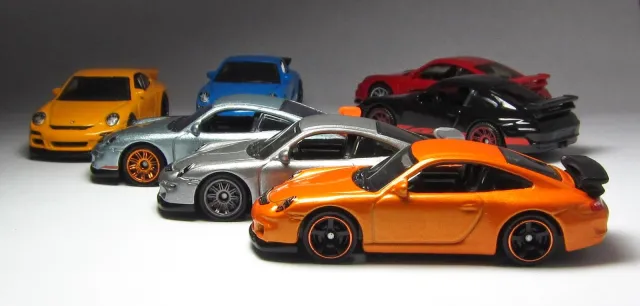
Photo credit https://lamleygroup.com/2015/05/21/the-last-golden-age-of-matchbox-porsche-911-gt3/

‘Carpe diem’ often crops up in my writing, and surfaces on social media daily, in different guises.

Living for the moment, or living in the moment – as you wish – can be a powerful mantra, to re-balance a frustrating moment in one’s day or, perhaps, even course correct on a more significant scale.

For many people undergoing moments of sheer crisis, using carpe diem to help consciously place value on things that are often overlooked (time with loved ones, being typically high up the list) can carry with it much deeper rooted sway, and offer up a slice of mental salvation, even if just temporarily.

Jordon Peterson emphasizes the importance of trying hard with the ‘everyday moments’ – breakfast chatter with family members, preparing a meal together, holding hands in the park. Peterson’s advice seems to match that of Annie Dillard, when she famously said: “How we spend our days is, of course, how we spend our lives.”

All of this we’ve heard before. And, maybe, the art of drawing from these sentiments, when required, is one of those past-times we will never quite fully master.

Last Boxing Day, during a brief staycation in the city, I met an 80 year old Chinese-born-American-raised, ex-financier, named Frank. “Another day above ground,” was his greeting to me, as we locked gazes in the hotel’s swimming pool.

Frank, it transpired, had retired at my age, and appears to have spent the last 35 years trying to help encourage aspiring professionals to do the opposite to what he managed to achieve.

Slow down, would be Frank’s counsel, appreciate not the materialistic assets for which you might strive but, instead, savour the smaller things in life.

“You can’t take the Porsche with you when you’ve gone,” he advised me (this was prior to him learning that I was in development and that, not only do I not know a Porsche from a Peugeot, but that I’ll never be in the market for one, unless it came in a matchbox set).

Of course, Frank is right – arguably, he is also well placed to share this wisdom with hindsight, having already made squillions of dollars working for the Qatari Royal Family as a stock broker in the 1980s.

Nonetheless, he’s right and, if we wind forward to the last week, day, or even the last hour of our own life, then 99% of the things that we spend time thinking about now (work, finances, relationships, assets, the future etc) do certainly become redundant, as we clear our minds, instead, to reflect, appreciate and to resolve.

True, some people will only be at peace, when they are at an end of life stage, if their reflections on what they have accomplished are measured by career achievements. In which case, work, assets and money are worthy and mutually reinforcing targets.

For others, measurement using these types of criteria are less critical. Oscar Wilde himself believed it to be a “curse” if someone had a predefined career path, as that would mean they weren’t afforded the luxury of waking up each day with “wings of independence”.

I’m a huge fan of Wilde, always ready to ingest his colourful observations: tasty mind-candy to momentarily sweeten my day.

However. I think “seizing the day” can be bigger than this, I think there’s more to it, and more required, than the short-term sugar rush of that particular attribute of carpe diem.

********************************************************

I had surgery on Valentine’s Day this year. My first time going into an operating theatre on a gurney, luminous bug-eyed lights craning over me, and four pairs of masked faces jostling around my feet with clipboards, as the plastic tube into my hand administered a calming anesthetic.

For 20 seconds, lying there, waiting to be knocked out, all of a sudden I decided to hastily reflect on my life, the brain whirring through all possible options, as fast as a 5G search engine.

I panicked. The anesthetic was circulating in my veins. I breathed. Within only a few seconds of manic emotional wrenching, I then paused and simply pictured Issy and the girls, held their warm smiles in freeze-frame and concluded (rather pathetically, but with as much profoundness as my soon to be sleeping brain could muster) that “I’d had a good life, and done quite well.”

Awake a few hours later, my Achilles tendon stitched back together, I felt a bit embarrassed at this rather botched attempt at spiritual reconciliation.

Who was I projecting my “last” thoughts to? Also, if, rationally, I actually thought there might be a chance I’d not ever wake from the surgery, why was I even undergoing this procedure in the first place?

All fruitless questions to pursue. The more important dilemma to untangle (I should have realised at the time) was, logistically, how was I going to stop to buy valentine’s flowers for my wife on the way home from the hospital, whilst on crutches, and feeling sleepy? A purchase which, for the archives, let it be recorded, I did manage to successfully accomplish.

A few day’s passed and I thought over the experience again, and became quite moved by my resolve at searching, in those seconds on the gurney, for an ultimate answer (particularly, given I’d no idea what the question was I was posing myself).

In that moment before the drugs kicked in, what I had felt was all of my senses in tune with this one active effort: to make sense of it all. The seconds that passed, as I was running a scan over my life, trying to spit out a suitable summary, were super intense, and had felt visceral and unfamiliar.

Three and a half months later and, on the verge of leaving Vietnam’s borders once more this month, and spending time with family and friends we’ve not seen since we were married in Galle in January 2020, what carpe diem feels like for me, today, is a much more rounded appreciation of the meaning of ‘awesome’.

As a colloquialism, awesome has been sold on the cheap. It dawned on me that “being inspired by an overwhelming feeling of reverence, admiration or fear” (the actual meaning of the word ‘awesome’) could be attributed to every second of one’s life.

For each second that passes, we change, we morph, we learn, we evolve. Only very, very slightly, each second, but change is happening, whether we like it or not.

And, yet, the only second that counts, the only second that can illicit awe, is the one that is happening at that moment.

Now, with what I’m about to finish on, I may, simply and idly, be lumping Peterson, Dillard and Wilde all into one mash-up, attempting to craft an ultimate carpe diem medley – having my cake and eating it, if you will. However, given I’m hopelessly devoted to some kind of pursuit in life that enjoys mixing different flavours of philosophy together, in order to make the most delicious bite (although I’m never satisfied with the final taste) then these last lines may well be nonsense, or just plain obvious…

Isn’t the truth of the matter this: when someone uses the phrase “the best is yet to come,” that should be called out as hogwash?

The “best” anything we’ve ever done, or experienced, is happening to us right now.

The best meal we’ve ever eaten is the one in our mouths when we are eating it. The best discussion we’ve ever had is the one in full flow right now (whether we’re having it with someone else, or with ourselves).

With each fresh breath of oxygen into our lungs, and flush of blood round our hearts, we are experiencing the awe of existence, the miracle of life.

Whether on our own, or in the company of others, whether feeling elated or feeling remorseful, or out of kilter in some way – the awe remains, it doesn’t ever go anywhere but lies, instead, under the surface of our lives, intuitively hidden away most of the time. Until it is needed.

The best isn’t yet to come, the best is right now. And it always will be.

Fluffing up the sawdust

The first time I received an actual wage was somewhere towards the end of 80’s, when my Mum’s mate, Bridget, invited me to work Saturday mornings in her pet shop.

Bridget passed away from cancer in the 90s, far too young, but those hours spent with her left a lasting impression. The warmth and enthusiasm she had for her business made the whole idea of “working” immensely easy. I was probably around 13 years old, but these memories of Bridget are crystal clear.

In the shop, I can recall her instruction to “fluff up the sawdust” in the guinea pig cages – to help with the sales – and then, some months later, in her home, and unbeknown to my brother and I when she was very ill, Bridget had us over one evening to listen to her vinyl back catalogue. Alice Cooper’s “School’s Out” still gives me goosebumps, planting me back on the Goan carpet in Bridget’s living room floor, singing along voraciously to the chorus.

To be born, as I was, with all the secure trappings of education, health and support, it has only been during these past two decades, of digging into a career in international development, that has highlighted so relentlessly what a privilege my life has been to date. And also, come to think of it, how much I’ve enjoyed working. Not something I’ve thought about along the way but, truly, I can’t recall a job from which I’ve not drawn something positive.

Perhaps, on occasion, this has been down to my perseverance, or from turning some learning from a previous work experience into practice. I’d argue back, though, that I’ve fallen on my feet most of the time because I’ve worked with some very special people.

From the auspicious heights of selling accessories for pets, through to working in my Mum’s gift shop, carefully sellotaping lavender fragranced pin cushions, and the like, in pink and white striped paper-bags, I ventured into gardening, landing summer work at the Prime Minister’s estate – Chequers – where the head gardener, Bill, taught me a thing or two about planting vegetables and cutting vines, as well as how to drive a car (he first took me, and three summers later, my brother, round the edge of the estate in his blue escort, barking out orders in his colourful South London accent).

From gardening, the inevitable mid-to-late teen indulgence of bar-tending took hold – I worked at The Pheasant pub in Great Missenden, and then at Moor Park’s Golf Club, which was nearby to my school. I did lunch and dinner shifts at the pub and worked the member’s bar and on Saturdays, weddings, at the Golf Club. The head barman at the Golf Club was a raging alcoholic and I often had to hide his car keys and befriend the patrons, in order to help usher him into a taxi. Every shift I remember being a bundle of fun. We laughed in the kitchens, waiting for the food to be plated, and we laughed after hours, smoking fags and knocking back drinks.

On one blessed day up in Moor Park, I served the comedian Peter Cook a pint of lager, not long before his sad passing. To this day I can’t remember what I said to him, but he was sporting a lemon jumper with a blue moniker on the breast, still wearing his one golf glove, and making small talk with his companions. He tipped me two quid.

Not long after I’d earnt my fortune from the catering industry, I left Uni and taught in Uganda for a year, (as I’ve long droned on about on these pages) – an equally rewarding and sentimentally charged chapter in my career. This was prefaced by two summers in Israel, volunteering as a jack-of-all-kibbutz-trades: milking cows, planting citrus fruits, washing dishes and chopping vegetables. I worked with Swedes, South Africans, Americans, French, German and Spanish. Hard work, long hours, and some of the best days of my life.

London next, from 1997 through to 2011, and a clutch of fascinating roles, firstly in the private sector for two years, hocking expensive, but life changing, month long expeditions to Africa and Asia for sixth formers, then a hop into Government, earning my spurs as a would-be civil servant, before landing in the non-profit sector and working my way through three charities specialising, respectively, in disability, cancer and, finally, corporate social responsibility.

2006 was the turning point, cementing my commitment to a mission of understanding how to address poverty and social injustice, and which has compelled me to write regularly (and now consult permanently) on the issue of women’s empowerment.

I know I’ve learnt a thousand things on this journey so far, but the one about women’s empowerment being the ultimate silver bullet to quashing the underlying causes of some of the world’s most profound societal issues, is one I will take to the grave. The formula is so simple, and yet we remain so far away from fulfilling the type of equity (in gender, but also in other areas) that would bring about profound, anticipated and deserved change.

When I think again about Bridget’s kindness and spirit, and how that helped curate a sense for me about what was important when it came to working, I can pick out a similar seam of behaviour from others with whom I’ve shared time in each of these jobs – in an office, a classroom, at a conference, with a community or, more recently, simply on a skype call.

Difficult to sum up in one word, these people, these experiences. Many colleagues have remained close friends, and I’ve long admired their passion for work, or how passionate they’ve been about getting the best out of other people at work. Many of them have also been just plain driven, determined, and steely in their resolve to do things well. Others, still, impressive in their knowledge, their courage, or in their humility.

Maybe the over-arching message I take away from these peers, and managers, over the years, is how important it is to keep one’s perspective in check. To know when to listen, and also when to act, is one skill, but to carry oneself at all times, and especially during the inevitable ups and downs of a workplace, with at least the bare soles of your feet touching one part of the ground, is a true gift.

Bridget had that gift. As did many of the other men and women I’ve worked with since, and with whom I hope to collaborate again in the future.

Philip Larkin wrote about work as a toad squatting on one’s life and I’ve long thought about his imagery since first reading his poems at school. It could be seen as an injustice, almost, that past generations have perpetuated an exhausting norm around a person’s career: that of working to live, of grafting away at a job as a means to an end.

For many billions of people, shaking off the work toad is impractical, ill-advised, or more likely, impossible. Our current Saigon lockdown is the worst yet, and it’s crippling people. Just as lockdowns in other countries have done, and continue to do.

My story and my message aren’t connected or related to the vendors at the end of our street, who have had to close their businesses. Or to the migrant workers from this region who travel to Thailand in search of factory work and higher salaries. My context and my reality is miles away from them, and from all of the communities I’ve visited around the world. This blog isn’t for those UK shop-keepers, either, anxiously opening up to customers next Monday, for the first time in over a year.

My luxury, right now, might not be the freedom of movement (it’s been 16 months to the day since I was last outside of Vietnam) but it is the freedom to work from home, and to continue to work with others whose very way of being inspires me.

If this writing is for anyone, aside from myself, it’s for those who might have lost some perspective, at work or in the day-to-day grind of living through a pandemic.

Virtual workspaces are a reality now for many, but I see not why it can’t still be possible to influence your colleagues in a positive way – be that person, like Bridget, whose breath-taking humanity and compassion might rub off on another, becoming forever etched, always there, just under the surface, glowing.

First world problems

boris
The UK Government is finally suggesting masks might help

I enjoyed Rod Liddle’s piece on face masks https://www.spectator.co.uk/article/why-I-will-wear-a-face-mask today.

For those unable to access the article, aside from the entertaining corollary he makes about only being allowed to have sex with his wife whilst wearing a mask, Liddle hammers home a key point, that many of us have been stating and re-stating over the past months about the merits of mask usage. Amusing banter aside, reflecting about Covid, he underscores what, in the UK at least, seems to continue to be an issue of Individual vs. Society.

“There seems to me more than sufficient evidence that while wearing a face mask does not entirely eliminate the risk of spreading the virus, it reduces it. We can argue about how much, but surely that is certain. And so, I will wear a face mask. Not just for sexual intercourse.”

Rod Liddle is an incorrigible writer and enjoys pushing people’s buttons on numerous topics. However, on masks, I couldn’t agree more with the premise of his argument for wearing one, and furthermore his conclusions over how slow to act the UK has been, in the face of the spread of the virus across Asia and into Europe.

Liddle doesn’t suggest Boris’ team has been incompetent, more that “they were possessed of an unconscious belief that this pandemic had been over-rated by supranational institutions, such as the World Health Organisation, that it was an over-stated concern.”

An unconscious belief.

Somehow this, for me, aptly sums up a lot of the conjecture, and ultimately the culture, of more developed nations such as the UK.

Of course, the UK media pounces on any decision the Government makes, when it comes to Covid. That said, the UK has suffered tremendously because of Covid, and although hindsight is a wonderful thing, many have been right to point out the shortfalls of the  Government which have made matters worse for the public.

Boris (described brilliantly by the comic Jon Richardson as a “human wet fart…funny at the time, but you have to immediately check for damage”) will, and probably should, remain the target for most critics. However, when it comes to societies typically used to seeing their country branded as “first world,” doesn’t this ‘unconscious belief’ symptom stretch further and wider, beyond politicians and the media, and into the day-to-day recesses of everyday life?

Were I to have still been living in London, these past 9.5 years, I would have felt the same. Covid started its carnage in a Chinese market, thousands of miles and cultures away from where I would have been living and working. If I’d been in the UK I can see me, back in February, talking to colleagues in Asia (as I did, in reverse, for weeks and weeks earlier this year from Saigon) hearing about the turmoil being faced by citizens in countries bordering China. Schools closing (as they did here during the first week of February). Quarantine rules in place shortly after this. Masks compulsory. Flights grounded. Lock-down enforced. Testing and tracing immediately initiated.

In Vietnam, and across Asia, there are more recent experiences of similar outbreaks, which have definitely helped drive action during Covid. Mask wearing is standard here, particularly if you are ill and out in public. It’s a cultural norm.

Citizens listen to their Governments in many Asian countries, because the nature of the political governance systems in these countries is different. Not all these differences are favourable to citizens, but they have contributed to a reality where Vietnam still only has 370 positive Covid cases and no fatalities.

There has been no end of speculation on social media as to why this is (as well as the predictable conspiracy theories). This thread on Twitter was particularly good in demonstrating just how pissed off some people were at the realisation that a “third world” country such as Vietnam was doing so well combating the virus.

Overall, you could say that there has been a unity here across the country, and in response to the measures taken by the Government, and perhaps that is part of it.

Expats like me are stuck until quarantine rules change, but life here is safe and we’ve had a much easier time of it compared to South America, Australia, the US or across Europe. Although schools closed for over 3 months, our actual lock down measures were many shades lighter than those elsewhere, and normal life resumed relatively quickly.

There are 98 million people living in Vietnam, and we have just 370 cases. These are truly insane figures, when you read that only yesterday there were 15,000 new cases in Florida alone.

Liddle’s words resonated with me because I realise the true privilege of perspective that living in Vietnam has given me.

Yes, I’m desperate to leave, move on to Australia, set up in fresh surroundings, and that day will come. Until then, recognising what and how these types of unconscious beliefs manifest – in all walks of life, and in their unbridled cause and effect – will remain something I’ll try not to take for granted.


Team Anyone But Trump

Kanye West says he's running for president, Elon Musk supports | KRON4

“Kanye West running for President”.

A new dawn, a new day, and another new absurd headline. I scanned the first few lines of this morning’s papers and shrugged off today’s selection of impending doom articles as quickly as it took for my coffee to brew and for me to seek solace – and salvation – in the cup’s reassuring aroma.

Like many, it’s hard to take anything you read in the papers too seriously. Especially when the topic is American politics.

But I was piqued, for a few seconds at least, by Kanye’s tweeted statement, whatever unfolds next.

It seems highly implausible for West to be serious, or in a position to launch an election campaign in 2020. It’s more likely a PR stunt of some description, but I am not qualified to critique Kanye West, as I have scant knowledge of the guy. I have only a fraction more of an understanding about how American elections work. But, of course, actual qualifications and knowledge are not required, when it comes to climbing to the top of America’s highest political perch. Anything goes.

So I don’t feel I need to do any quick research to be appraised of West’s credentials as the issue, it seems to me, is cut and dry: anyone over the age of 18 years old, from any background, discipline or political persuasion, anyone, would be better than Donald Trump as America’s next President.

The audacity levels of Trump (yesterday using an Independence Day public appearance to slander swathes of his own country’s citizens, whilst peddling more false information about Covid-19) have stretched so far that, as ludicrous as he is, as grotesque and revolting as his narrative continues to be, he remains highly likely to stay in power until 2024. That is the bizarre reality behind how so many aspects of our world order seem to operate.

Of course, some would say that there are far worse characters in the Republican right-wing than Trump himself. I say, isn’t it worth running a potential risk of that magnitude in order to, at the very least, remove Donald Trump from power?

I have not even an atom-sized morsel of a compliment to pay to Donald Trump. He is a bullying, bigoted, raping narcissist, whose child-like, toxic diatribes will forever stain his country’s history books. He should have been locked up long before he ran for President.

The rogue offspring of Beelzebub would make for a more palatable option on this year’s 2020 ballot paper than Trump. Literally anyone, anyone. Dear God, please, just anyone other than him.

To me, there is simply no longer any excuse for Trump to continue to be in power. No longer any excuse for him to be allowed to reside over any law, jurisdiction, or any decision or policy that has the smallest ripple of societal impact.

That the opposition party are only able to field “Sleepy” Joe Biden as their ‘best’ chance of toppling Trump is almost as excruciating as having to tolerate the idea that Trump is still in the frame.

From today onwards, Team Kanye have my full support.

Anyone but Trump.