What Drives Someone to Climb Everything: The Nirmal Purja Story


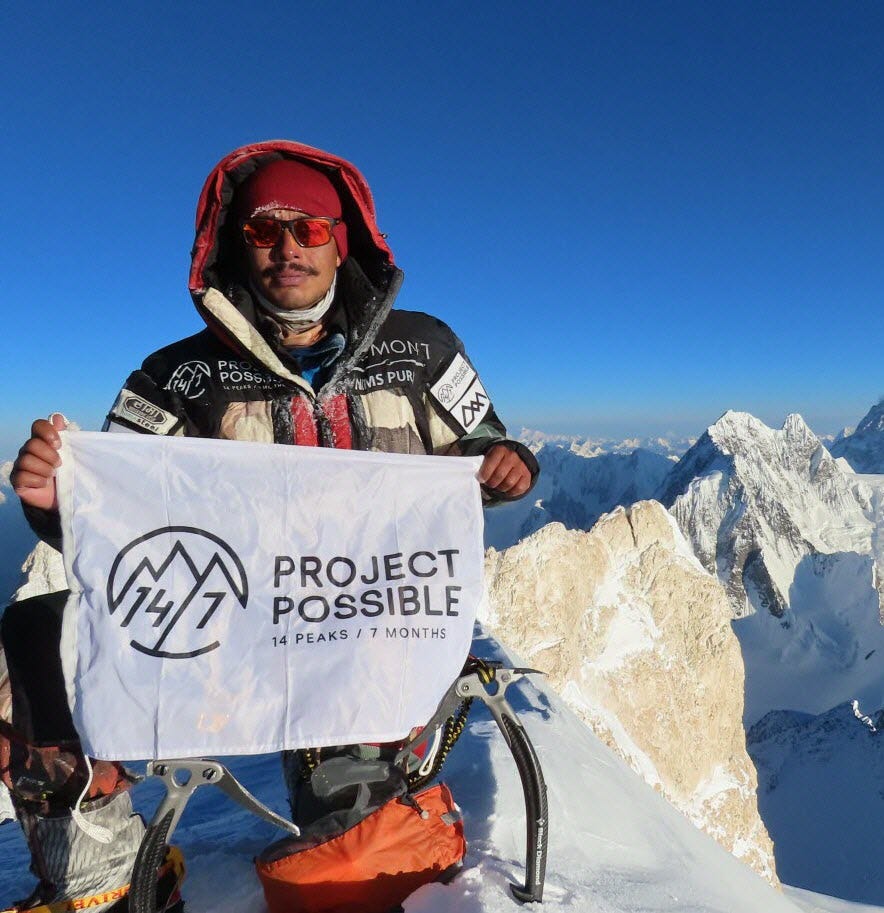
Nirmal Purja, in 2019 during his 14 Peaks Challenge.

When I started typing this on Friday, the man in the photo, Nirmal Purja, was missing along with nine others, following an avalanche that struck Broad Peak, one of the world’s highest mountain ranges in Pakistan.

Sadly, Purja’s death – and that of others in the group – was confirmed yesterday.

Soon enough, the lives and achievements of each of the ten climbers will be fully shared. And I’ve no doubt that, collectively, the miles they’ve undertaken, across some of the world’s most challenging terrains and topologies, will all be recorded for posterity.

When mountaineers are asked why they climb mountains, the famous refrain is “because it’s there.”

For Nirmal Purja, whose profile has been across these headlines, not only had he climbed mountains his whole life, but he’d dedicated a lot of his time to raising awareness about climate change in the process.

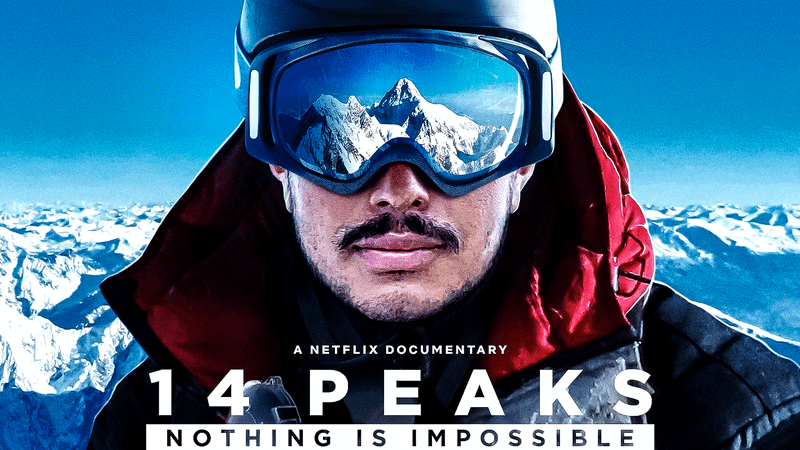
He’s famed for having summited each of the world’s 14 peaks that reach up over the 8,000 metre mark. He managed that in 2019, in just seven months – the previous record for such an achievement being eight years. The documentary of this feat is well worth watching.

Purja is Nepalese born and an ex-British armed forces soldier. Like many other Nepalese who guide climbers up and down Everest each season, it’s fair to say he’s “built different.”

The one time I visited Pokhara, in Nepal, on an expedition of sorts, was in 2002. While we only casually meandered around the famous tea-trails, rather than scaling vast heights, we still got to see just how hospitable, humble, and strong-as-oxes the local sherpas are. I recall them insisting on carrying our backpacks for us, with each guide squeezing three at a time into a wicker basket, whose strap was then slung around the guide’s forehead.

While we wore durable ankle boots, they were in simple footwear. They always went ahead to set up camp, ensuring a tea urn was at the ready for us, to wash down a round of snacks. We were all suitably exhausted as we turned in each night, leaving them to clean up.

This type of hospitality and kindness exists in many countries, and is often not only driven by the host’s desire to earn fat tips from tourists, but is more deeply rooted in the pride felt about one’s own country, and a desire that visitors will have a special time there.
Purja appears to have epitomised these humble traits and managed, in this lifetime (he turned 43 just eight days ago) to amass a portfolio of climbing that is perhaps unrivalled by anyone in our history. A phenomenal legacy in itself, added to which he also dedicated part of his adult life to the British Army and did more in recent years to raise awareness about the effects of climate change than some governments of the world can claim to have done.

What is it that drives an individual to such accomplishments, I wonder?

I looked into some old interviews he did and it’s quite clear that mindset is a key piece of the puzzle for Purja. He talked about it more than almost anything else. Asked what carried him through the military and onto the mountains, he pointed to the discipline of decision-making under pressure and what he calls simply a “positive mindset.” He’s said that people are largely limited by their own imagination – that if you can’t picture something, you’ll never attempt it, let alone achieve it.

Purja is explicit that his positive mindset isn’t a personality trait he was born with but a skill he built in the military and then deliberately carried into climbing. In that way proving that discipline can be transferred from one arena of life to a completely different one.

His record wasn’t necessarily broken because he had better lungs (although to me it’s also clear that he absolutely did have better lungs than most people) or better gear than anyone, but because he refused to accept that eight years was simply how long the task took. He removed any self-imposed limits on the whole thing and then committed fully, and planned relentlessly.

The other standout facet for me are from the side stories on his challenge, where he was generously trying to support others during his summiting. There were mini rescues of other climbers that he undertook, for example, and he seemed very conscious of trying to stay humble at all times while taking on this gargantuan goal.

Lastly, Purja talks about respecting what you can’t control. He explains he takes zero mountains for granted. Particularly poignant given he said this before setting off for Broad Peak itself.

It’s incredibly sad to read about the events of last Thursday on that mountain. For all the families and friends whose lives have also been altered in the process, and will never be the same, it’s an unfathomable task that they now face.

In that way, the accomplishment of Purja and his colleagues is both inspiring and quite maddening in perhaps equal doses.

However, for anyone attempting anything in their life that feels “challenging”, I think there’s a lot to learn from what people like Purja have demonstrated: which is that extraordinary outcomes are rarely the product of extraordinary luck – they can be, instead, the product of an ordinary decision, repeated with total discipline, until it stops looking ordinary at all.
Living Planet

This week I spent three days up north in Ba Vi National Park for a work gig, facilitating a group of organisations preparing to launch a sizeable programme to support both local communities and local wildlife.

Several participants were environmental specialists and turned up with cameras boasting enormous zoom lenses in camouflage casings, plus tripods, binoculars, and the enthusiasm of people who know exactly what might be hiding in the next tree.

Our training room looked straight out over the forest canopy. Every so often we paused mid-discussion so one of the pros could point out a flash of wings, or rare birdsong drifting through our windows.

“What a privilege”, I offered to the group, for us all to be gifted that time together, and in those surroundings. And it really was.

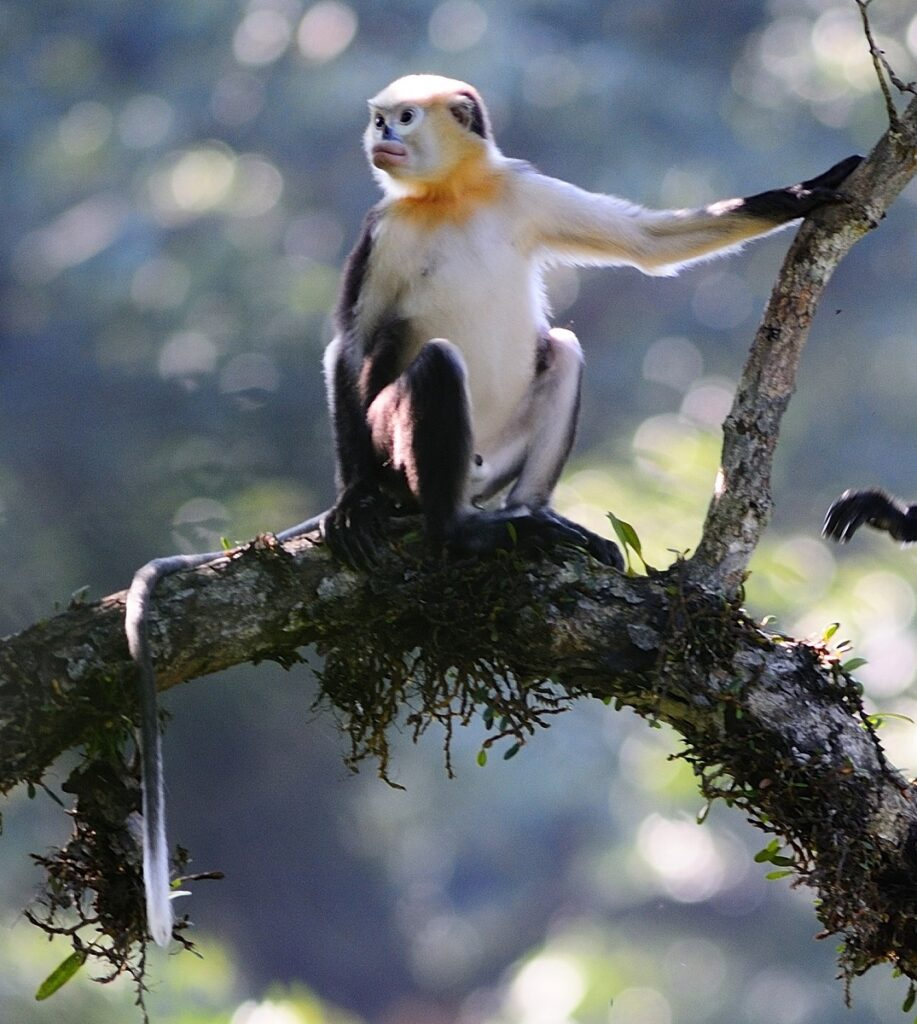
Vietnam, historically a place where biodiversity losses have been severe, has been investing far more in conservation in recent years. Some species here exist nowhere else on earth. The Tonkin snub-nosed monkey, for instance, lives on in a single province. The most recent census estimates around 250 adults remain.

One of our colleagues last week, from Flora and Fauna International, is a global orchid expert who has photographed 100,000 of them, and gives regular keynote speeches about orchids around the world.

He explained how local rangers and conservationists are fighting to protect the Tonkin. Hearing about the level of care, energy, and sheer patience involved was humbling and inspiring.

It also brought me back to a recurring question: just how would I describe Vietnam’s cultural relationship with animals after fifteen years living here?

It is, in truth, a study in contrasts.

On the one hand, conservation campaigns are growing, park systems are strengthening, and young people increasingly speak the language of biodiversity, sustainability, and stewardship.

On the other, daily life still carries a kind of blunt, transactional way about it.

The morning “wet” markets offer a menagerie of protein options. Fish are sold alive from tubs of water, and dispatched on the spot after being clattered with the back of a knife and scaled while still flapping, before being plopped into a plastic bag for the customer.

Frogs sit bound in twine, together in pairs, until sold, when they are abruptly sliced open and their skin pulled off like a wooly jumper being removed.

Every part of a pig is eaten. Colleagues of mine used to bring the ears to work for lunch. Once I’d overcame the mild shock of seeing a pig’s ear next to the sugar jar in the office kitchen, it dawned on me that there is something genuinely honourable in respectfully consuming all the parts of an animal.

In so many other scenarios around the world, millions of animals are treated inhumanely, week on week, slaughtered at industrial scale levels, their body parts packaged in aesthetically pleasing ways, and half of their carcasses thrown away.

And yet, emotional distance can drift into callousness, and there is still a rather cruel vibe to how certain animals are treated here – although, as always with cultural norms, one person’s cruelty is another’s everyday practicality.

I’ll never forget taking my friend Maude to dinner in 2012 at a rooftop BBQ in Saigon. I accidentally ordered a dish that involved a glass bowl of cold water being placed on a stove in the middle of our table, and a handful of live prawns being tossed in. As the water warmed to boiling temperatures and they began scrabbling at the sides, we found ourselves staring at the bowl in disbelief, even as other diners treated it as a normal Tuesday night.

The momentum toward conservation in Vietnam is tangible. New interventions now prioritise biodiversity and environmental guardianship in ways that simply weren’t part of development work fifteen years ago.

Being up in Ba Vi, especially knowing how severe Hanoi’s pollution has been lately, reminds one that nature is sacred – and that our newfound concern for ecological impact is, historically speaking, breathtakingly recent.

Maybe that’s why birdwatching is exploding globally. People want to admire something beyond themselves. They want a reason to look up in awe.

And yet our attention is fragile. Life distracts. Work distracts. Ego distracts. As I wrote last week on the anniversary of Rosa Parks’ arrest, we easily get tangled in our own “stuff” and lose sight of the bigger tapestry we’re part of – the birds, the bees, and each other.

On my flight back to Saigon this evening, I watched a documentary about David Attenborough’s life. As always, in admiration of the colossal effort he’s put in over sixty years to hold up this one truth – that we so willfully seem to forget – which is, very simply, that we’re living in unprecedented times.

To quote Attenborough:

“We are currently in the midst of the earth’s sixth mass extinction, one every bit as profound and far-reaching as the extinction of the dinosaurs.”

Watching the great man and orator in the documentary, mic-dropping as he has done at COP conferences, Davos, and the like for the past twenty years, was a timely reminder of how to better see the relationship we have with nature.

While climate change and global warming frame how we impact nature, of course it is our fragility, dependency and ultimately our sustainability which relies so heavily on the health of the natural world.

Each drop of water and gulp of air is because of nature, not government or big business. And each time another species sits on the brink of extinction, we are stepping that bit closer to the day when it will be our turn.

Piemonte

Beneath lavender rosemary scented calm,
Vine-laden squares of golden green
Lie framed
Within this morning’s bright ceramic canvas.

Staccatos of gravel crunch underfoot,
Off beat
And lost amidst nature’s purring symphony,
Forest warbles,
Farm percussion.

Nature’s purest offering
Distilled to nourish,
Dust-coated vessels
Preserving ancestral norms.

To breathe in again
This cicada dawn chorus,
This bejeweled vista,
Is to silence the heart –
To love once more.

Cossano Belbo, Aug 2019.

Thai Green*

bkk

Beneath snaking concrete viaduct, baking heat
Cooks sunburnt pores, street vending nooks,
Pungent fried sizzles punch lung deep, an urban Kingdom
Jostling air, space, and conditioned lifestyles.

Bangkok.

Spiced iced tea, rice soup, lychee cocktails,
Mesmerizing Soi-mazed corners
Inhale city sewer flavours,
Pavement tiles uneven, tilting, roasting.

Curbside, rainbow taxi ranks flank
Juice bar pit stops, bamboo bar tops,
High rise scrapers, elevators, shopping centres –
Eastern promise meets Western dream.

And still.

Not far flung from this urban jungle,
Nestled north, enveloped forest,
Lies a calmer version –
Country living –
Breathing, feeling,
Fibrous woodland,
Smoke-filled thatch.

Chiang Mai.

Opening up green borders,
Boundaries,
Walk amongst your past-time inclines,
Sun bleached hills and warbled song birds that
Listen back.

Stop here, stop now and let this touch you –
Nature’s glorious paradigm,
Working.

chiangmai

*A poem inspired by a damn fine Saturday morning, and several elephants