
There is this re-frame I heard the other day, about anger, which I quite like. It goes something along the lines of: when someone does something that makes you angry, it’s not that person who has made you angry, it’s you.
Sure, you think, it’s my anger. I’m the reason it exists in the first place, and I am the only one who can control it. Others around me, or the surrounding environment, can influence the extent to which I amplify up the feeling of anger, or dial down that feeling. However, it really is all on me, I suppose, when it comes to why the anger is even there in the first place.
Right, says the other side of this coin. But, if you followed that approach ALL THE TIME, then you run the risk of encouraging, or incentivizing even, people to behave in a way that could very well be poorly judged. Rather than suppress your anger, you should challenge what they have said or done, and seek to influence that, in what you perceive to be a positive way.
OK, but then we’re relying on everyone agreeing on certain morals, behaviours, ethics and perspectives, and across numerous topics, aren’t we? If we are to assume that confronting one another, with reasoned argument, to pacify a situation, is the best solution, we will surely go round in circles trying to agree, and likely infuriate each other, only to then, ironically, exacerbate and increase anger amongst more rather than less people?
And so on.
At this point, of course, we could digress about freedom of speech, about a country’s laws which lay down “right” and “wrong” as well as further tangents (which could even take us into discussions about how folklore, and now our modern day “Marvel” adventure-stereotypes, teach us about “right” and “wrong”, and about “good” and “evil”.)
Instead, something on cultural norms…
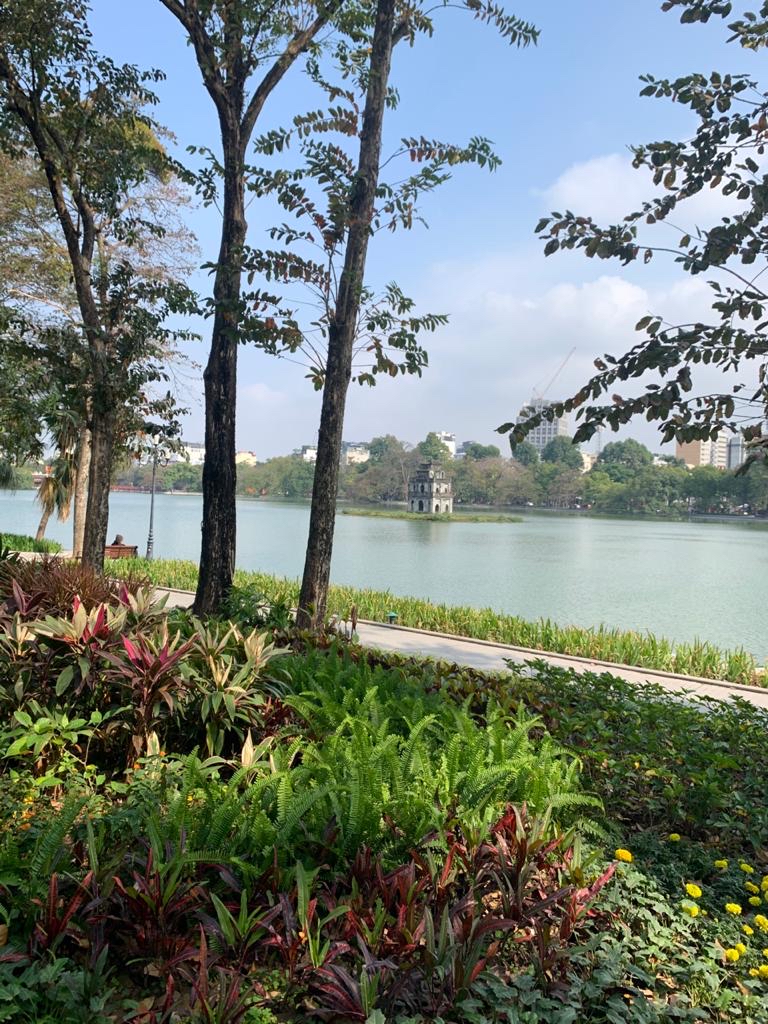
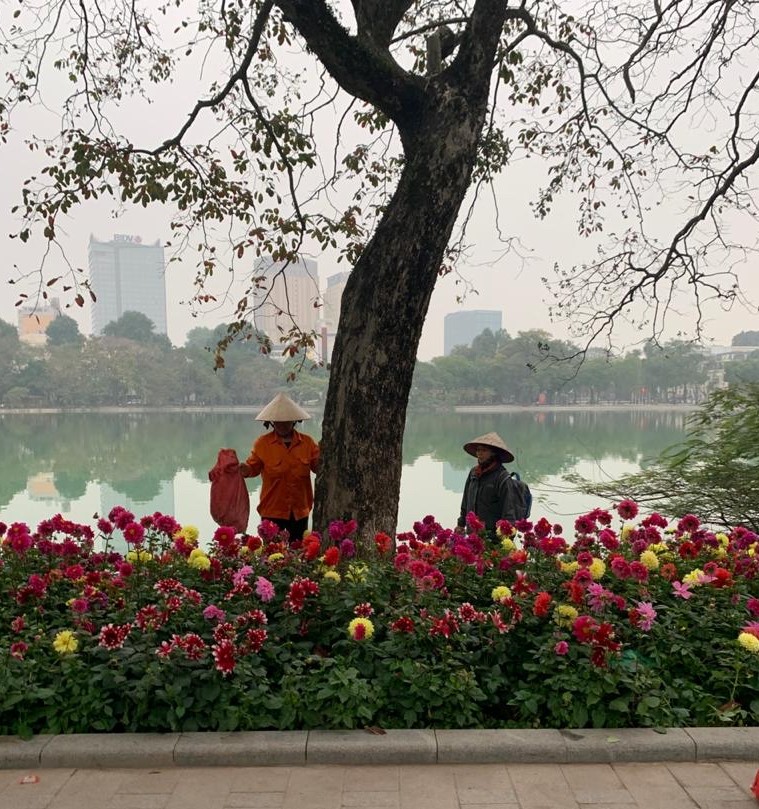
Here in Vietnam, as I may have mentioned a few times in the past 13 years, it is frowned upon to display anger, especially in public. Of course, it is not illegal to be angry but it is rarer than in other cultures to see people displaying anger. I have witnessed some heated rows in the street, and I’ve openly argued with many people here. I’ve been angry, they’ve been angry. It hasn’t been pretty.
Generally, though, once you raise your voice to another person in Vietnam, you have lost any argument you might be legitimately trying to make (in which case, and at last count, I am down about 25-0 in terms of losing arguments.)
So, let’s hear from the poet David Whyte, who describes anger in his book, Consolations, as follows:
ANGER is the deepest form of compassion, for another, for the world, for the self, for a life, for the body, for a family and for all our ideals, all vulnerable and all, possibly about to be hurt. Stripped of physical imprisonment and violent reaction, anger is the purest form of care, the internal living flame of anger always illuminates what we belong to, what we wish to protect and what we are willing to hazard ourselves for. What we usually call anger is only what is left of its essence when we are overwhelmed by its accompanying vulnerability, when it reaches the lost surface of our mind or our body’s incapacity to hold it, or when it touches the limits of our understanding. What we name as anger is actually only the incoherent physical incapacity to sustain this deep form of care in our outer daily life; the unwillingness to be large enough and generous enough to hold what we love helplessly in our bodies or our mind with the clarity and breadth of our whole being.
When I first read Whyte’s book in 2017, and he referred to anger as an ‘incoherent physical incapacity to sustain this deep form of care’, I hadn’t read any description about anger like that, prior to that. It was mesmerizing (the whole book is the same). The writer Brené Brown, similarly, also claimed anger to be “the violent outer response to our own inner powerlessness”. I like this, too. Brown’s idea being that, when we are angry, we are acknowledging this powerlessness, and our own sense of there being something deeply wrong and vulnerable about being so powerless.
It’s of no coincidence, perhaps, that I find myself back here after 5 months, talking about anger, given the visceral and constant nature of how we receive information 24/7. The many stories, quotes, videos and pictures – harrowing and uplifting – shared by so many people around the world, plastered across global and social media channels, is both overwhelming and awe-inspiring. And so much of it is, particularly these past two weeks since news broke of the conflict in Gaza and Israel, anger-inducing.
It can be of little surprise, too, that, like many of you I’d wager, my attention span for new content and dopamine inducing click-baitable fixes, is forever reaching new and bleaker low-levels.
How much content and communication is too much?
Many people reminisce about the happier times, prior to the internet, and before the rise of social media. Anger was around then, also. But was it tempered at all, compared to today? I don’t think we can really know, nor that it would make any difference, when looking at how to manage our emotional responses to things in the future.
I do believe that that phrase – “it won’t make any difference” – also happens to be one of the scourges of, at the very least, my generation (GEN X, in case that is significant at all) when it comes to numerous societal issues: politics, climate change, equality etc.
Now, I vote, and I’ve marched for causes. I sign petitions, I blog about some of these topics. I feel that all actions have an impact of sorts, however minor.
Do I think my contributions will make any actual difference? Not really. But that would never be a reason not to write again, or to vote, march, campaign, argue, debate, influence, and so on. In my estimations, it is the combination of having purpose and responsibility in one’s life which can be palpably important to the way one feels each night, when closing your eyes and trying to find sleep. So, “keep on keeping on” then? Even if it’s for your own sustenance? Maybe.
I do believe, though, that there is a healthy correlation with that particular combination (responsibility and purpose) along with one’s tendency to allow kindness to guide your decisions. Whether this is the form of kindness that, as the phrase goes, requires you to be “cruel to be kind” or, alternatively, is kindness deployed in order to offset your anger, through acts of kindness, isn’t perhaps strictly important.
Like the cadence one finds in any pursuit that necessitates repetition and deploys a form of physicality (internally or externally) it is perhaps the practice which does, in the end, make perfect.
So, I think we need decent amounts of time to practice how to feel and to competently manage these emotions – kindness and anger, for starters – and that takes longer than anyone is prepared to admit. A lifetime even (although I think you can target at least ‘middle-age’ for decent enough proficiency.)
To close out, I’ll finish back where this started, a simple re-framing exercise. Can it work?
When you read tomorrow’s headlines, recounting the day’s horrors unfolding in the Middle East, how does one find a way forward, emotionally? How do you perform your own triaging service to yourself, in a way that caters to both your anger and your anguish? Being angry in that moment, and sustaining that anger is arguably more appropriate – surely – than allowing it to dissipate? Or, instead, turning that energy towards something else, something which gives you purpose and responsibility – even just in the tiniest of moments – could be said to be much more ‘impactful’ and worth making happen.
Do these formulas work for when, later the same day, someone cuts in line in front of you, and you feel the red mist enveloping? Arguably, as we are often reminded, it’s important to put perspective on things. To be “thankful for what we have” in that moment, when we want to kick out at someone, or at something.
Anger is a primary emotion, you can dilute it, and you can embolden it but, mechanically, it is simply one thing, one feeling.
So, the question should be: how do we learn to manage our anger?
And the answer to that is, I would argue, up to you, and no one else.



 saigonsays