Catalyzing Change in Sri Lanka

For what might now equate to my tenth visit to Sri Lanka since 2010, I’m compelled, as so often has been the case when pacing down Bandaranaike’s airport terminal on my way home, to write something.

This trip was to spend time with the team from Chrysalis, a social enterprise that morphed out of the closure of CARE Sri Lanka in 2016, after half a century of CARE’s commitment to local communities.

In these last eight years, Chrysalis has grown its staffing from two dozen to over 125 colleagues, simultaneously reaching hundreds of thousands of Sri Lankans, with interventions designed to support business, community, and the future of the country.

COVID-19, and a catastrophic economic turnover in 2022, has not stopped the advancement of Chrysalis’ work and the resilience of its team. They are, to quote Tina Turner, “simply the best”.

This trip was to discuss their plans for the future, as a Board Member, and as a friend still to many of the team who I have known since the start.
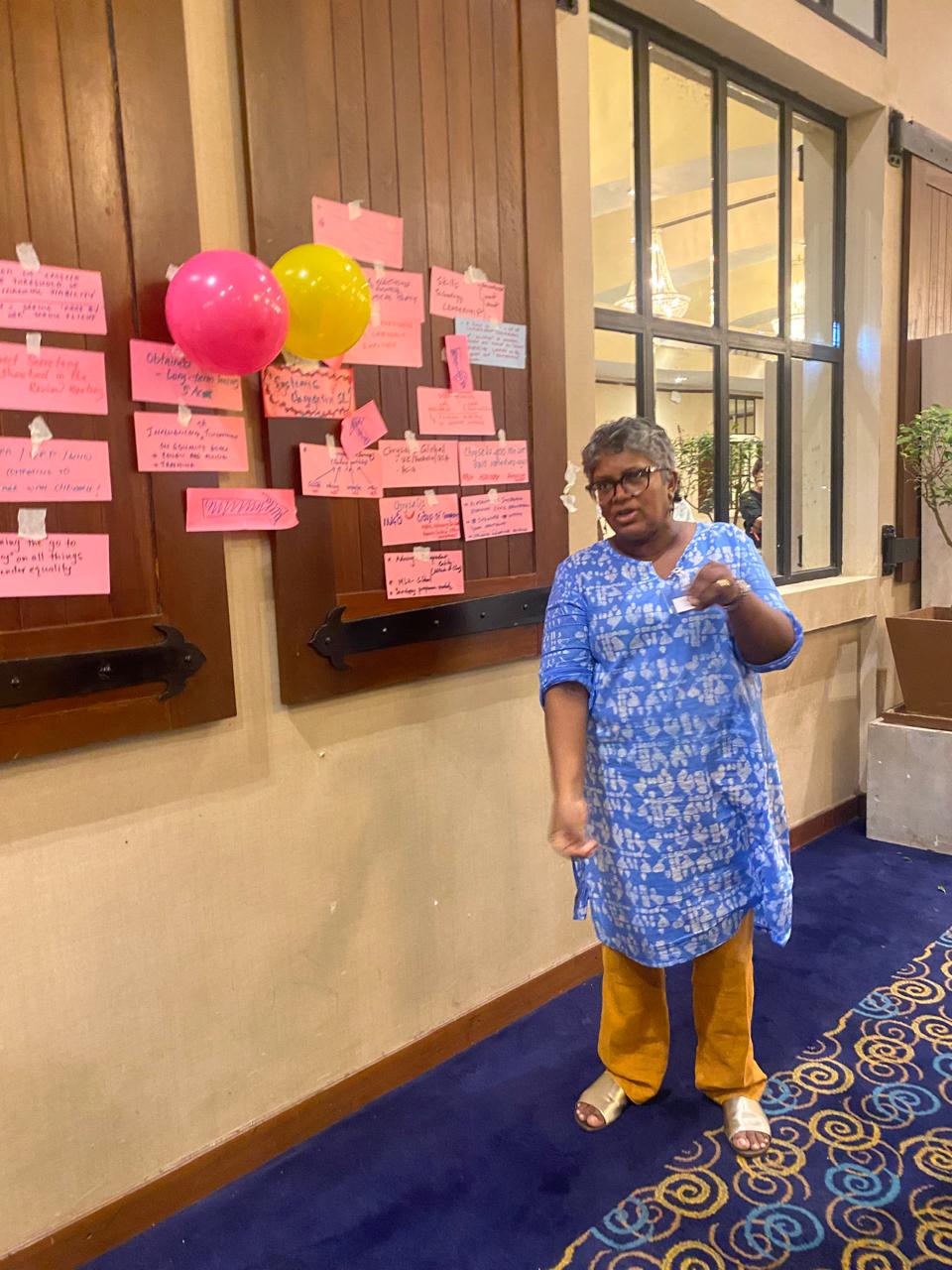
Their CEO, Ashika Gunasena, is a force of nature, and an ardent supporter of women’s rights and investment in the country’s young men and women. She and her husband came to our wedding, in Galle, back in January 2020 and, with confidence, I can say that her leadership qualities are one of Chrysalis’ secret success ingredients.

Ashika has inspired those around her to inspire others. And what inspires Ashika? For one thing, all the dedication and expertise that is embedded in Chrysalis’ field teams and local experts. 

In that way, Chrysalis’ unique model is all about ‘flow’. Up and down, and across their organization, colleagues listen and learn from one another, and leadership is inspired not just from “the top” but from every corner.

To quote Ashika, “as well as thriving off of the knowledge of our local technical specialists and their dedication, the role of Chrysalis‘ core team is also paramount – they inspire, too, by their capacity and their relentless passion for making a difference.”

This weekend reinforced just how critical this human connectivity really is. 

With political tensions afoot, due to upcoming Presidential Elections, and social unease always bubbling under the surface, Sri Lanka continues to tentatively navigate an escape route from their 2022 economic malaise. 
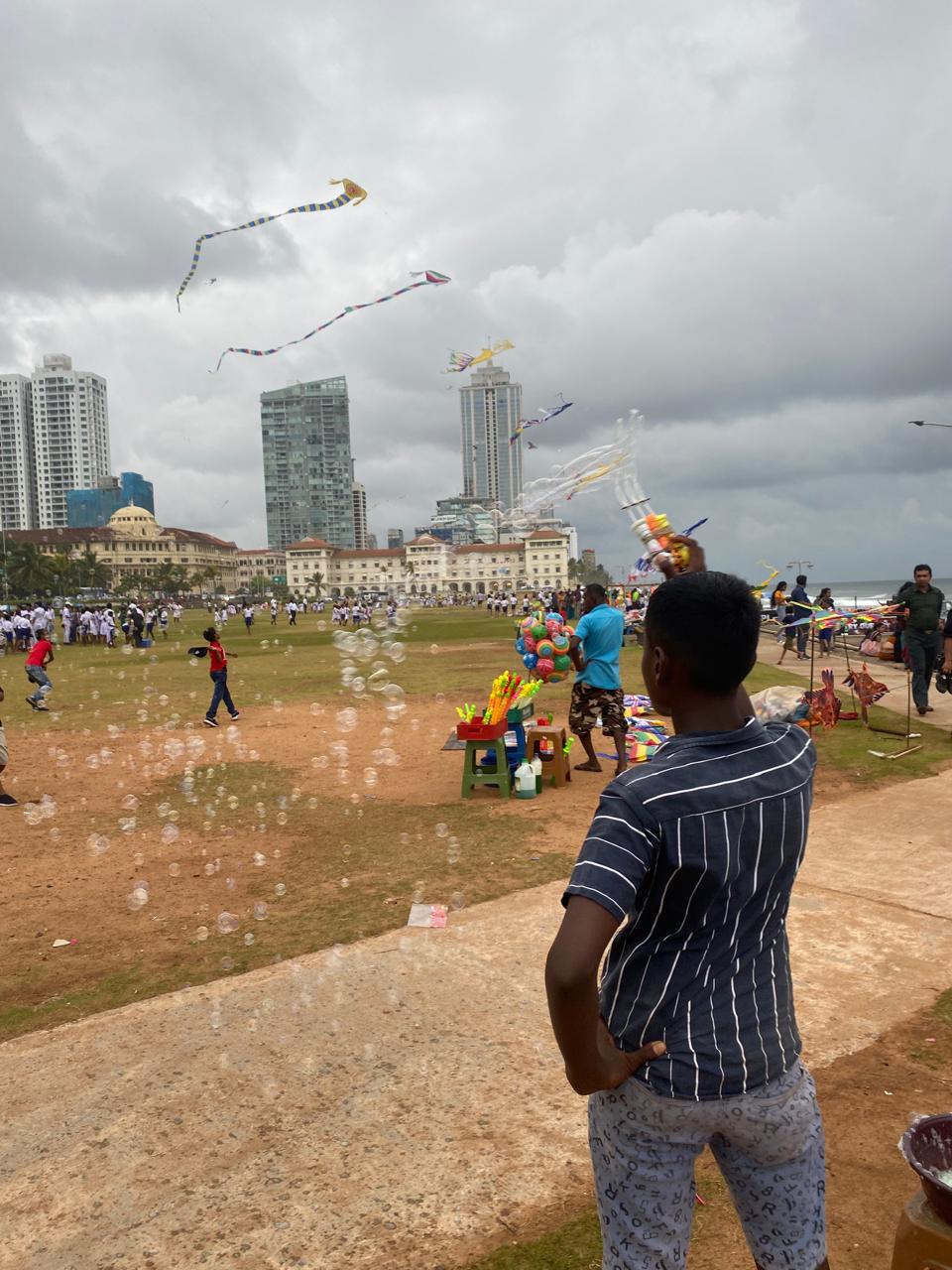
Colombo is a small enough city to have made demonstrable improvements since I first came here, but this is yet to materialize. “The city desperately needs a facelift” claimed one of our Board to me over the weekend. 

As the north and east of the country slowly, but optimistically, open up to new infrastructure and commercial opportunities, many millions of citizens still rely on day-to-day increments of money on which to get by. 

Just a few hundred metres from the plush, but rather raggedy hotel we stayed in 40 kms south of the capital, local life ambles on. The warm and genuine smiles remain – they are quite unlike any other in that regard – and the camaraderie and chirpy disposition of everyone you meet lifts the gloom of economic and social realities, and lights a way forward that is impossible not to embrace. Much like the bright beams you catch at this time of year through the brooding, grey clouds and the constant drizzle and random monsoon downfall – the authentic charm of Sri Lanka is through its human touch. 

Chrysalis is in great shape and, I predict, will flourish still more. Whilst its mission to empower women and youth is laser focused, its services are broad reaching and adaptive – from the provision of training to businesses on gender and diversity, to connecting artisans to more profitable markets, or advocating for the rights of workers to safer and more dignified workspaces.

There is a grounded, gutsy heart to the voice of this organization, made up of staff hell-bent on actually changing systems and societal norms. These are colleagues who stand for those most in need, but they do that by standing by one another.

Conducted over a long public holiday weekend, our discussions went on into the evening and no one complained. Field teams were driving 7 hours home on the final evening and were back at their desks first thing the next morning. The tempo on display here is relentless, as can so often be the case in the non-profit world.

Tight budgets and challenging local surroundings often surface some of the most innovative solutions and endear those closest to the “work” with a commitment that counts quality and integrity above all else.

I head back home inspired once more and thank Ashika and her team for that. Chrysalis is making positive changes in society and ‘walking the talk’, where so many others fall short. 

For more information about their work check out Chrysalis | Catalyze Inclusive Growth for Women and Youth (chrysaliscatalyz.com) or drop me a line. I’ll be sure also to share more on their programmes soon, over on http://www.definitelymaybe.me.
Homage to my hombre

When I applied for our Australian residencies over five years ago, at one stage of the process I had to log every trip made over the previous ten years (for my daughters also). Quite the task, it turned out, given the privileged nature of how I have spent my time living overseas.

In spite of all the hours I’ve notched up sat in musty metal tubes, soaring over countries and continents before being spat out the other end, I’m always be-dazzled by the experience.

Inhaling Saigon’s humid fumes on a Tuesday evening one minute, buzzing through a throng of scooter traffic enroute to Tan Son Nhat airport, you are just two to three plastic trays of food (washed down with gulps of industrial strength gin and tonic) away from squinting down at the London Eye the following morning, the white glare off the city’s skyscrapers winking back at you.

Home from home.

Last month, I flew back to England briefly, a short touchdown in Doha between Saigon and London Gatwick, before I trundled off through customs and boarded a train to Brighton. Half an hour later and I’m walking out of the station and onto Western Avenue, down a small laneway and onto the pebbled beach, bacon sandwich and coffee in hand.

The sea was murky, and the waves were heavy, but the feeling of salt water on the skin and the cold clumpy sand between my toes was spectacular. Like it was worth travelling over twenty hours just for that.

Staring across to the end of Brighton’s famous pier, I spotted the Helter Skelter ride, calmly battered over the years by gales and the slow erosion of the ratan mats that slip-slide around it, before flopping onto the cushioned base.

Florence and Martha have swooshed down that Helter Skelter, in the summer of 2018, and in their pre-teens. They did so with the son of one of my oldest friends, Quinten, aka “Q”. We met at the beginning of secondary school in 1986. Alphabetically organised, our single wooden-top desks were set out in lines: Ahn, Ali, Babcock, Baura, Bishop and Bullock – we were the first row from the classroom door.

Back then, Q (Babcock) had a shock of blond hair and ruby red lips. I use that last description poignantly because, only last night, Q and his family were sat here in our apartment in Saigon, and his children were joking about how red his lips still are. One of the school dinner ladies, Q recalls, once asked him very loudly if he was “wearing lipstick” as she dolloped a ladle of mashed potato onto his plate. The accusation has made it into family folklore ever since.

In any case, Q and Alex and their kids are, as these words are being typed out, about six hours into their flight back to London. They safely completed a two-week romp around the south of Vietnam, book-ending the visit in Saigon, and indulging with us in some of our favorite past-times – eating, drinking and playing games.

The added bonus for me, these past couple of weeks, was to see how smoothly all our kids connected with each other.

Akin to when Flo and Martha meet up with their UK or their Australian cousins, they simply dive in and have fun. Second-hand clothes markets were frequented (thanks to Issy), cocktails and mocktails at our local Japanese bar were sampled, Vietnamese spring rolls were ordered, and re-ordered, nails were painted, balls were thrown in the pool. It was all so very easy. New surrounds for them, new visitors for us to show around. A win-win.

As we turn our sights to a transition to Melbourne in 2024, it’s times like those we’ve just had with special friends that makes long-distance relationships bind even deeper. You find yourself taking off from where you last left things, as if the time in between has evaporated. There is a clarity of purpose, a steady flow of stories and sharing. Even the simple past-time of playing a game of cards is attributed an extra sprinkle of pleasure.

These moments are treasured, and these lifelong connections are everything.

Thank you Babcocks!

A New Year

Four months since I posted anything on Saigonsays.

Ironically, most of that has time been spent freely moving around in Saigon, and beyond, and so perhaps these freedoms have taken over the reflections (and written musings) brought on by last year’s severe lockdown and confinements?

Over in Hong Kong and China, maddening periods of quarantine are still in place for visitors. Omicron spreads like wildfire elsewhere (and no doubt we’ll experience that soon enough).

Vietnam, meanwhile, has been pushing on with softening its restrictions since October, and has ensured a high percentage of the population is now triple vaxxed.

Borders are open for those of us with residency, and so 2022 is already, hands-down, considerably more of an exciting prospect than the ennui and helplessness curated by 2021.

Tet – Chinese New Year – is days away. The city is buzzing, and the locals’ smiles are as full as the moon will be next month.

Although the clear spring skies of December have morphed into a daily pea-soup mush of pre-Tet factory and construction pollution, the markets are thriving and the trees and flowers adorning the pavements are as brilliant as I’ve seen them.

It’s the turn of the Water Tiger in 2022. ‘Stability’ and ‘self-esteem’ being two of its fabled characteristics.

All I keep thinking is that I’ve only one more year left until we reach the Cat (my year) again, and I’ll have experienced the full circle of mystic connotations that these dozen animals embody, since landing in the country on February 28th 2011.

***********************************************

Issy and me made it up to Dalat a few weeks ago. Flying on a plane for the first time in 7 months, and ambling around the hills and through the forests that encircle this sleepy town.

A crisp 12 degrees at dawn, we eagerly wrapped ourselves up in jackets and hats, long since discarded, and enjoyed the evening red wines all the more, sat by our hotel room heater.

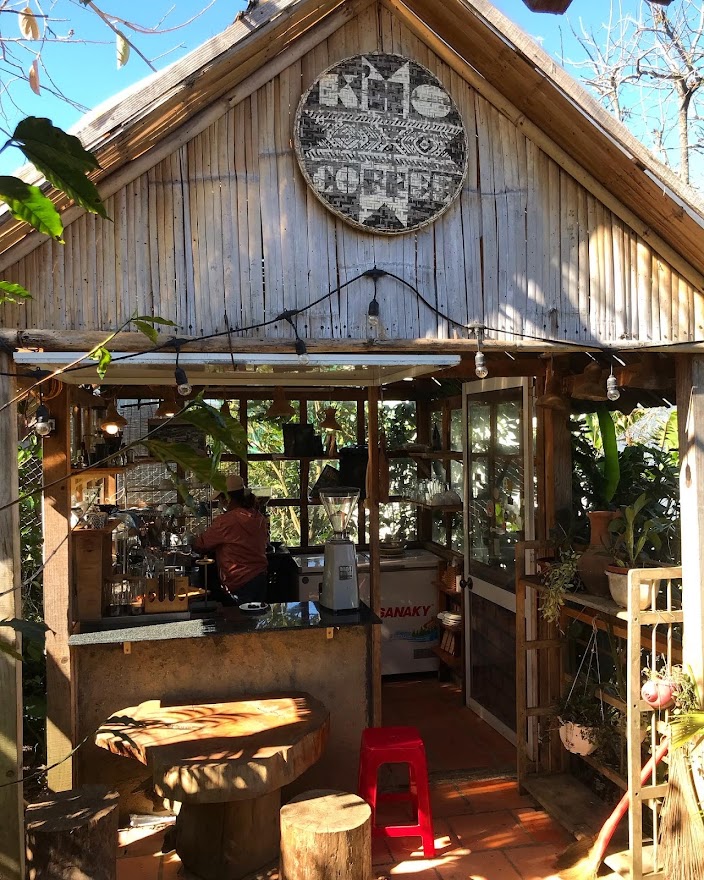
On one of our outings up there we scooted out to the coffee plantations, and looked up the plot owned by K’ho Coffee, the suppliers of our coffee beans, for as many years now as I can remember.

I talk often about the places I’ve spent time in (as I type this I’m listening to a song that I first heard in Peru in 2013, and whose beats catapult me back to bus rides through winding roads out to Cusco, and the taste of pisco sours drank the evening before stepping up onto the plateaus of Machu Picchu) often, like now, I’m lost back in time, back in these moments.

When I finally leave Vietnam I know the recollection of buying the small yellow Tet tree, that I picked up this morning on my way home (balanced on my knee precariously as I wove along with other bikes in the midday sun) will be fresh, and will buoyantly re-kindle the image of the same tree perched, as it is now, on our garden table, waiting to bud, proudly sat to help me pay respect to this most celebrated of Vietnamese times of year.

I’ll recall, and will marvel, at the memories of all the Vietnamese dishes guzzled down regularly here. Of the close confines of local district life puttering about us, as we stroll down to our local bar for an aperitif, or to the curry house on our street where the chefs stoke open air tandoor ovens and the frangipani trees flop over their garden’s walls.

The Turkish shawarmas and to-die-for falafels, prepared but 400 metres from our house, the French galettes around the corner – christ, we’ve even got Union Jack’s, the fish and chip shop, run by a Brit and pushing out steak and kidney pies and jugs of gravy like we’re living in East London.

This truly international vibe in Saigon, in 2022, and in spite of the craziness brought on by the pandemic (and the exodus of foreigners as a result) is breathtaking. It somehow slots well into the groove of Vietnamese street-vended noodles and drip-coffee and the meshing of cultures seems to work most of the time. The beer halls are crammed full with locals inhaling IPAs and loaded fries; Korean bubble tea houses vie with Starbucks on every modern apartment block corner.

Even in Dalat we sat in the serene courtyard of a house specialising in stunning home-cooked Italian food and wine. The best I’ve had here.

What treats, what delights.

And yet, what a slim perspective, still, on this vast and ranging country, up and down which there remains still so much potential, so much development needed, and so much investment to support each province, and each household.

Saigon’s growth is striking.

But so, too, is the risk that many could be left behind in the melee for modernisation.

Roadrunner

“You’re probably going to find out anyway but here’s a little pre-emptive truth-telling – there’s no happy ending.” (Anthony Bourdain)

We watched Roadrunner over the weekend. It documents the life of Anthony Bourdain, a man I belatedly became quasi-obsessed with, not many years prior to his suicide, in June 2018.

It was the colourful biography, Kitchen Confidential, which spring-boarded him to fame, about 20 years ago, and almost certainly and aggressively pulled him away from being a chef in New York, to traveling 250 days a year around the world, making TV shows about food and culture.

Vietnam was one of the first countries to “wow” Bourdain, and go on to have a continuous and powerful impact on him, during his future visits here – including eating bun cha with Barack Obama up in Hanoi in 2016.

Other countries followed, each stirring up a cocktail of emotions, as Bourdain hopped from slurping street-vendor soup to smoking pipes with desert nomads, sampling exotic and, at times, gruesome cuisine along the way, determined as he was to inspire others to do the same.

As his film-making evolved, his line of enquiry became more intense and more considered.

Bourdain seems to connect well with everyone he meets (although, as commentators in Roadrunner will attest, directing him on camera can clearly be a nightmare).

As a viewer, I admired how he interacted with people on his travels, and noted at the time how his own careful, yet celebrity-kissed effervescence was often blunted by the authenticity, and the grace of the people with whom he momentarily spent time, or shared a meal.

As I was in awe of him, it was he who was in awe of the person sat in front of him at that moment on a plastic chair, talking about their livelihood, or about their hopes and dreams.

These emotions he experienced, from his constant exposure to different contexts and perspectives, and the lasting impressions they left on him, were then churned up and recycled, a million times over, amongst viewers, like myself, of his various shows: A Cook’s Tour; No Reservations; The Layover; and, finally, Parts Unknown.

For the most part, I imagine, these offerings served to inspire people on different levels. One tenet that runs through each series was the concept of being ‘on the move’:-

“If I’m an advocate for anything, it’s to move. As far as you can, as much as you can. Across the ocean, or simply across the river. The extent to which you can walk in someone else’s shoes or at least eat their food, it’s a plus for everybody. Open your mind, get up off the couch, move.”

What Roadrunner illuminates, through its intimate outpourings from Bourdain’s family and friends, was that his years of travel were “never about the food.”

To spin a metaphor about how he might, instead, have been using fame, and trips overseas, as some kind of personal odyssey, so as to make sense of his own anger and frustration with the world, as well as with himself, could easily be construed as simplistic, and trite. However, it’s easy to see how this could have been the case: he was a man who never settled, was “always rushing onto set, or rushing off it…fleeing home, or fleeing from home” to quote from the film a sentiment that echoes throughout it.

During these chaotic, yet lucid, sojourns from continent to continent – drinking pulsating cobra heart juice in Thailand, being evacuated from Lebanon during a war, or just blustering through tequila shots with rock stars in Joshua Tree – there are some moments of ‘stillness’ for Bourdain, that Roadrunner captures. Moments where he does seem to find a karma, of sorts: becoming a father; being in a new relationship; breaking into deep smiles with friends, at very precise moments of camaraderie.

You feel, watching, that this stillness could provide a commendable corollary to the rage, anger and boisterous indifference that peppers most of the narrative associated with Bourdain. His can be a sensitivity, a genuineness and a purity unbridled to most who choose to place themselves in front of a camera lens.

Ostensibly, Roadrunner catalogues the litany of one man’s lifetime of reflections, circling around an over-arching curiosity that Bourdain pursued right until the very end. A curiosity which sought to answer some of life’s most existential questions.

And, for me, it’s this combination of anger and of calmness, with which Bourdain jostles, that make for such an engaging canvas on which to then let his curiosity run free.

In this sense, watching Roadrunner, like watching an episode of Parts Unknown, is made to feel a hugely relatable, and grounding, experience. Temporarily accompanying Bourdain on his quest (and, in the case of Roadrunner, condensing into a couple of hours Bourdain’s 61 year commitment to seeking out answers) is nothing short of an honour.

In his two decades of film-making, he made it clear that “aspiring to mediocrity” was never an option for him, and in that regard I feel he maintained the highest of standards.

That the last third of his life was spent “on the move”, very publicaly asking these questions – skittishly and consistently unsatisfied with the answers he was uncovering – is both upsetting to observe, as well as acutely uplifting, and insightful, all rolled into one.

Anthony Bourdain challenged norms and behaviours – relentlessly, and as widely as is possible in a lifetime – in search, perhaps, of the impossible.

That every contributor to the film, on camera, finds themselves lost for words, in their attempts to sum up, respectively, what Bourdain’s legacy might be, and indeed why he chose to end his life, is in itself a testament to the enormity of what he’d been committed to achieving.

Visibly moved to choking tears, one of Bourdain’s close friends (still angry at the reality that he’ll never again have his companion sit with him) challenges the film-makers to select a cheesy, closing scene of Bourdain for the final seconds of the film – “ideally, him walking down the beach on his own…he’d hate that” scoffs the friend, grinning.

The same guy then shaves his head (uncut since Bourdain’s death) and heads off to graffiti one of the nearby murals of Bourdain, in his neighbourhood – a last ditch attempt to connect with, to laugh with, and to indulge with his friend.

It’s a fitting and special tribute, because it’s so profoundly different, conventionally, to how people normally would behave in that situation.

In many ways, it’s the perfect tribute to a man who held a similar principle close, in all that he set out to accomplish, even though you got the impression he never quite knew what that actually was.

Pulse

img_6730

Dawn in Lumphini Park, Bangkok.

Pulse

This man sleeps in five-star
rooms
high above and
looking down
on that man
squatted behind
a pyramid of limes,
waiting for a customer.

This woman feels forever
late
and ill prepared
to teach the class,
outside
that woman
sleeps under a tree
quietly breathing
whilst traffic stuck,
shuttling him and her and them
onward to a new
moment of playing at
who they are.

We are all in sales,
scouring time
to feed the
pulse and curiosity
of where each
investment might take us too next –
a better paid job
a clearer conscience
a meal.

Feeling at home, far away from it

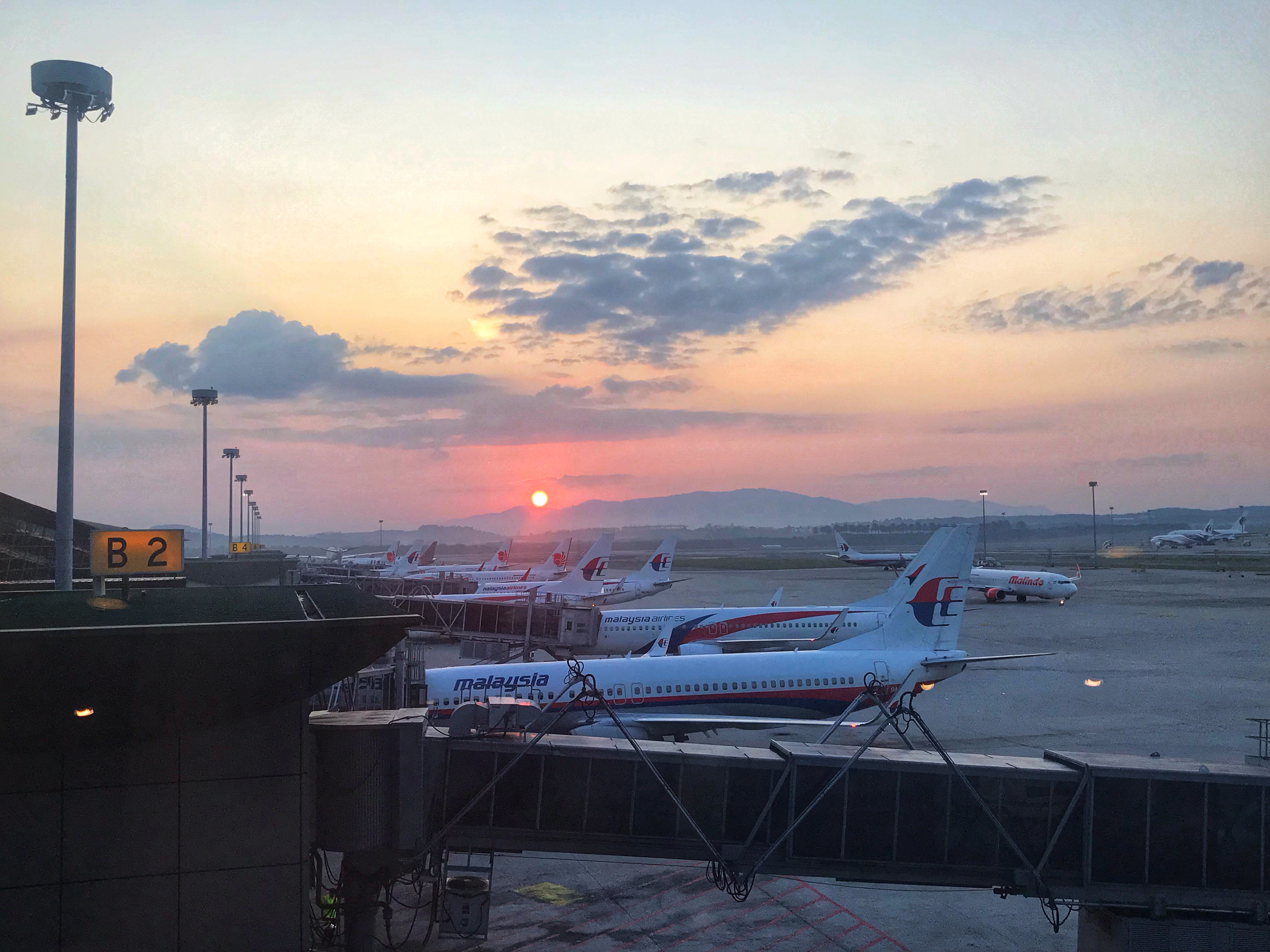
The weekend sun rising. Kuala Lumpur airport.

Pit-stopping on the way back to Saigon – Starbucks, Kuala Lumpur airport, no less – I’ve the usual frisson of excitement about walking back through our garden at home a few hour’s from now, picking up the girls (Issy is in Germany this week, checking out fashion trade shows) and flopping on the sofa.

After five days in Sri Lanka, to work with our Chrysalis team there (musings on which from earlier can be found over here) I don’t, in some ways, feel like I was away from ‘home’ much at all this week.

I’ve been fortunate enough to visit Sri Lanka about ten times since 2009. I’ve written about it quite a lot, and that, no doubt, underscores why it’s one of my favourite places to spend time.

Aside from the professional experiences gained from engaging with our team there, and the organisations and people I’ve met along the way, it’s the day-to-day flow of contact and the momentary interludes that weave through these trips, which I think bind each together in a way that feels so familiar and reaffirming.

Moreover, it’s the simple easiness curated by the people you meet which imbues such a comfortable backdrop.

Dropping down to Galle on a quick pre-wedding whistle stop reconnaissance earlier today, to check on bookings and inhale the ocean breeze, I learnt about the reality of the recent Easter Sunday attacks, in terms of their impact on the tourism industry.

Not unsurprisingly, many tourists canceled their trips in May and June as a result of the bombings, and some hotels had to close completely. July and August are typically low season months too, and so a few hoteliers I met spoke of the “double whammy” of the events happening when they did.

Bookings are picking up again now. And whilst there is heightened security evident, things seem to have settled down. The country just this week was elevated to “middle-income” status by the World Bank, and the high ranking top spot given by The Lonely Planet earlier in the year to Sri Lanka, appears to have been reallocated back to the country, even though most of Sri Lanka remains in a state of deep shock over the events of April 21st.

With such charming scenery, culture and opportunity for the visitor, let’s hope that a  positive trajectory of tourist bookings returns.

As my taxi driver, Mahinda, took a short detour this evening, on our way to the airport, to stop and offer me tea and bananas at his house, and the opportunity to meet his wife and daughter who was awaiting her ‘A’ level results, I was touched by the sentiment and the care he took to make me feel welcome.

I found the same hospitality and warmth earlier in the week when invited over to my Air BnB host’s living room, to share dinner with him and his wife.

Listening to Mahinda’s daughter talk about her plans for university, and for finding work somehow with her degree (biology) I couldn’t help hope that, in the future, not only will my daughters have the self-esteem and spark to be excited about a feeling of “doing my best” in the world, as this young woman did, but also that they – and beyond them, that I too – hold close that very core humanitarian embodiment of connection and understanding that I felt, sat with a cup of tea in my hand, listening to and being a small part of, this family’s time together.

The overwhelming feeling of being truly welcomed into their home, for a few precious moments, will stay with me forever.

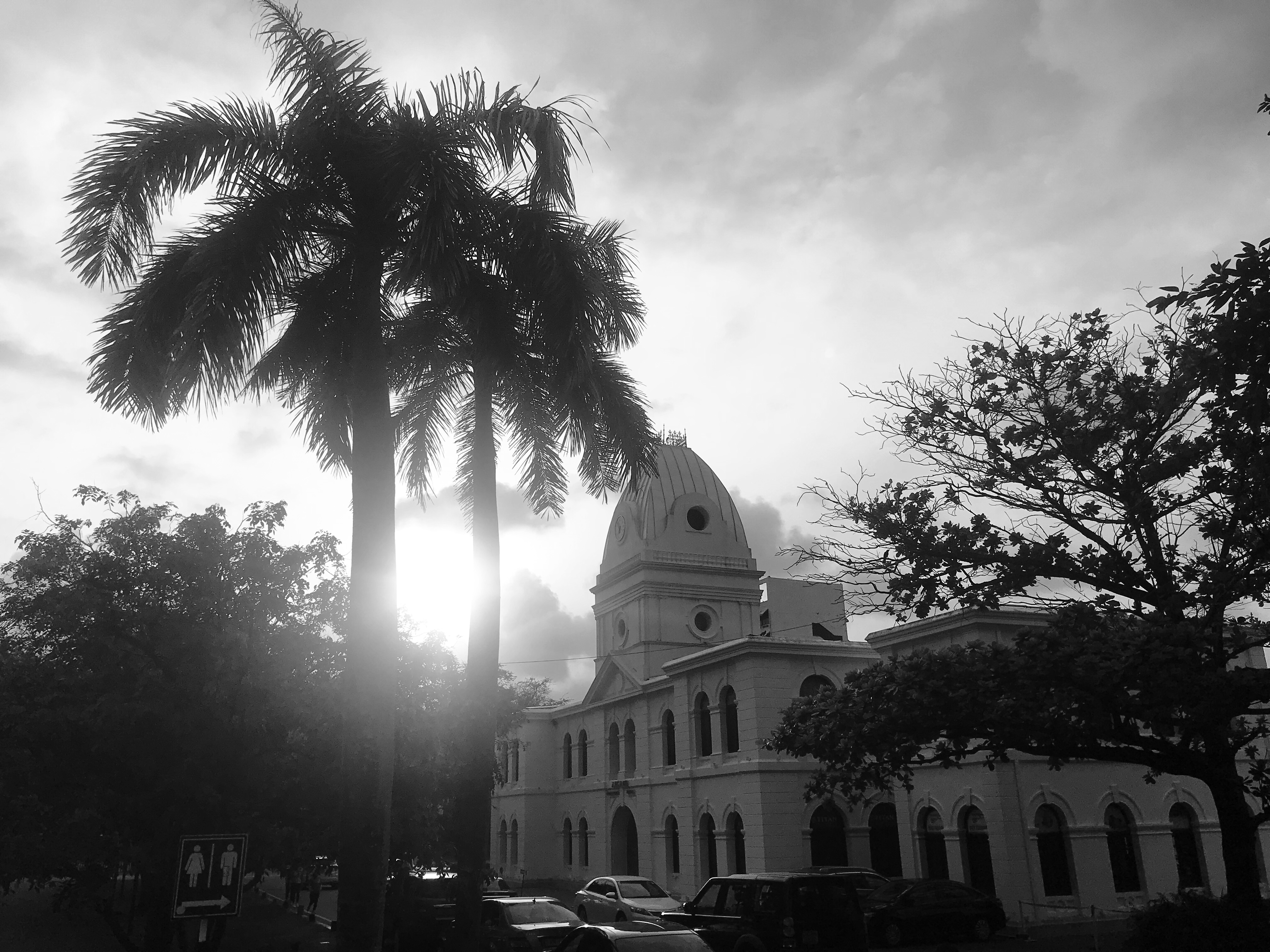
Colombo at dawn.


September

A blast of vacuumed heat before the
Metallic shuffle obediently find their seats
Among strange faces and familiar fare:
Screens, blankets, solace.

I linger inside the terminal.
Warmed by embalming recall of
A month’s journey –
Scaling Sapa’s peaks,
An utterance of life-affirming words,
The Comradery of new friends and horizons.

My feet take fresh steps towards the plane and
In a single and unexpected second,
I feel it.
The core of something changed and now fixed:
Anchoring, purging, reinforcing.

This is me and I am enough.

IMG_2273

A Quick Coffee Stop in Laos

image
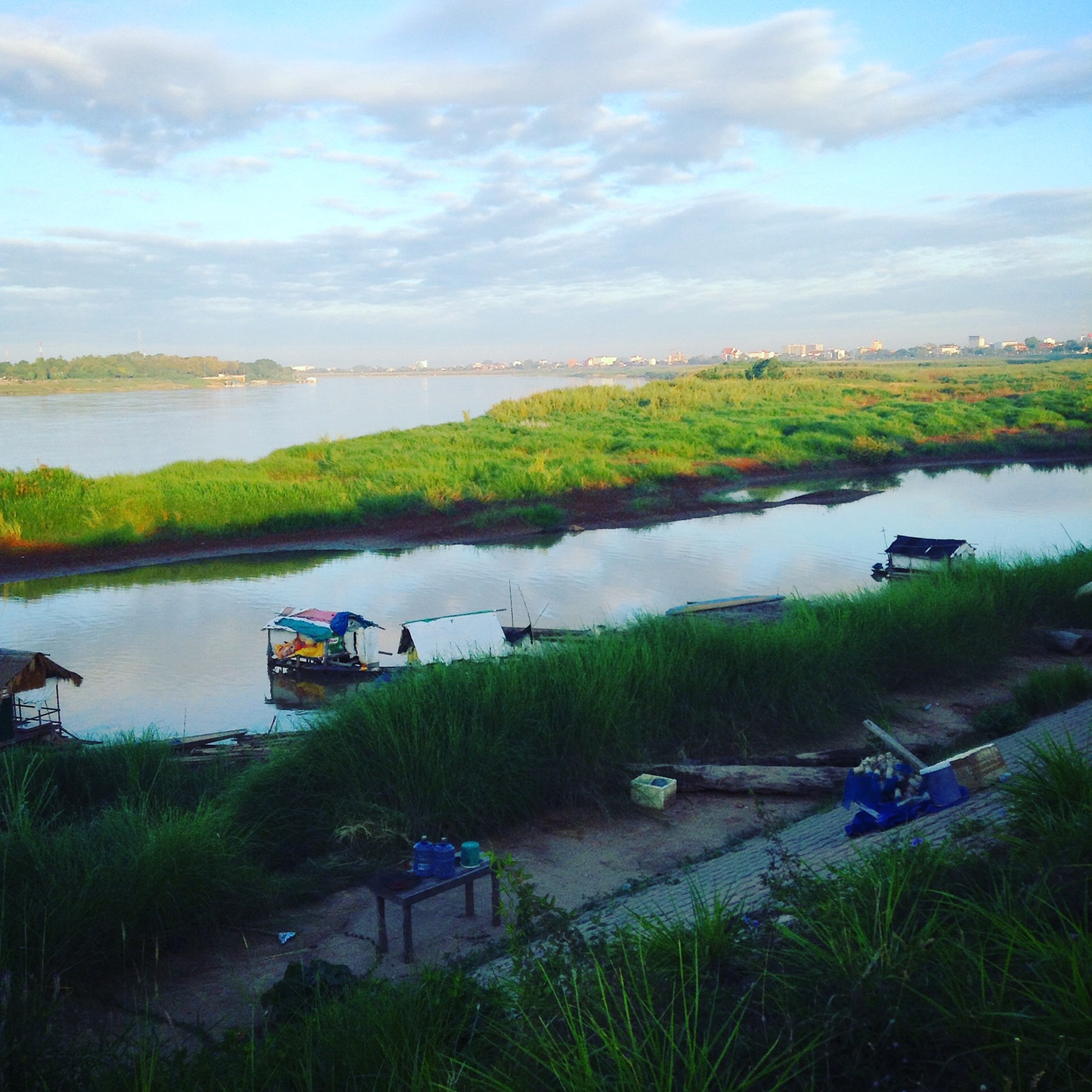
The Mekong River at sunrise. Thailand to the left, Laos to the right.

I’m sat with a delicious Saturday morning coffee, in Naked Espresso, a funky cafe in the thick of the Vientiane backpacker area, having completed my daily ritual here of a brisk walk down the Mekong River nearby, which has presented me with picture perfect views this week of Thailand, just metres away over the water.

Since my last post about holidaying in Australia with Issy, I’ve traveled for work to Colombo, Bangkok, Singapore, and Seoul. Squeezing in a weekend of football in Manila along the way. I’m trying my best to be a good citizen of the world, but for sure I am going to carbon hell.

Vientiane represents my penultimate trip of 2015 and, fittingly, last night I kicked off the evening with some Kiwi friends, in a German owned bar, managed by a kind man called Kami from Tokyo, where we tucked into some Laotian pork rolls, washed down with a few drams of glorious Japanese whisky.      Continue reading