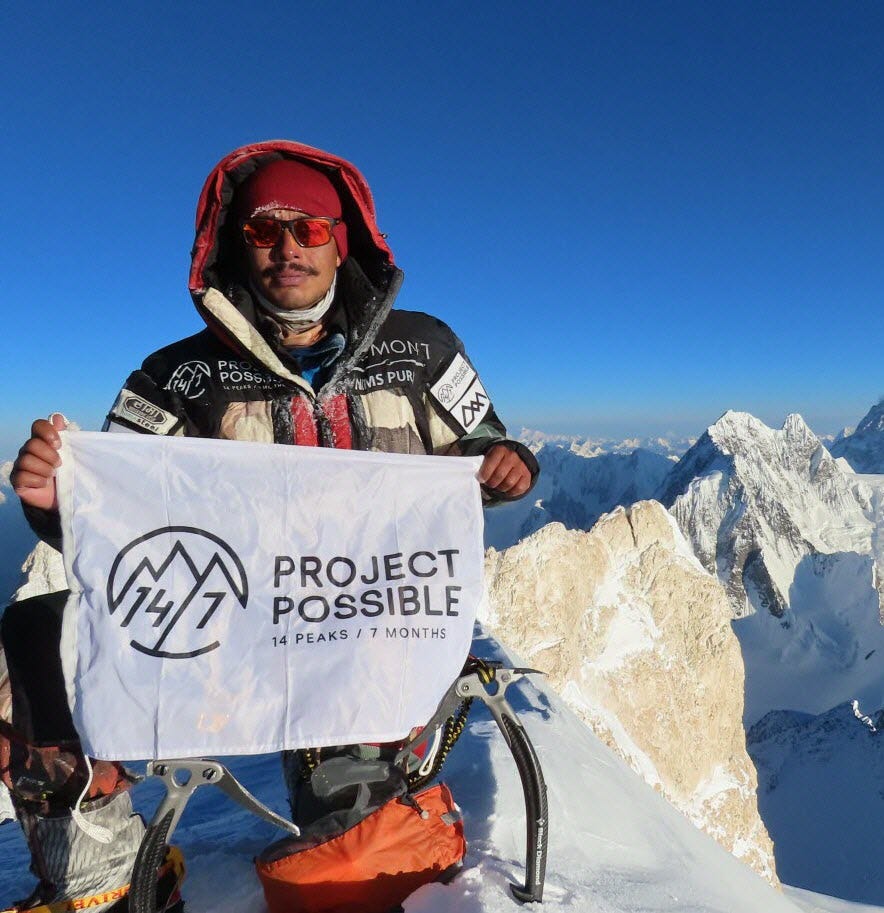
When I started typing this on Friday, the man in the photo, Nirmal Purja, was missing along with nine others, following an avalanche that struck Broad Peak, one of the world’s highest mountain ranges in Pakistan.
Sadly, Purja’s death – and that of others in the group – was confirmed yesterday.
Soon enough, the lives and achievements of each of the ten climbers will be fully shared. And I’ve no doubt that, collectively, the miles they’ve undertaken, across some of the world’s most challenging terrains and topologies, will all be recorded for posterity.
When mountaineers are asked why they climb mountains, the famous refrain is “because it’s there.”
For Nirmal Purja, whose profile has been across these headlines, not only had he climbed mountains his whole life, but he’d dedicated a lot of his time to raising awareness about climate change in the process.
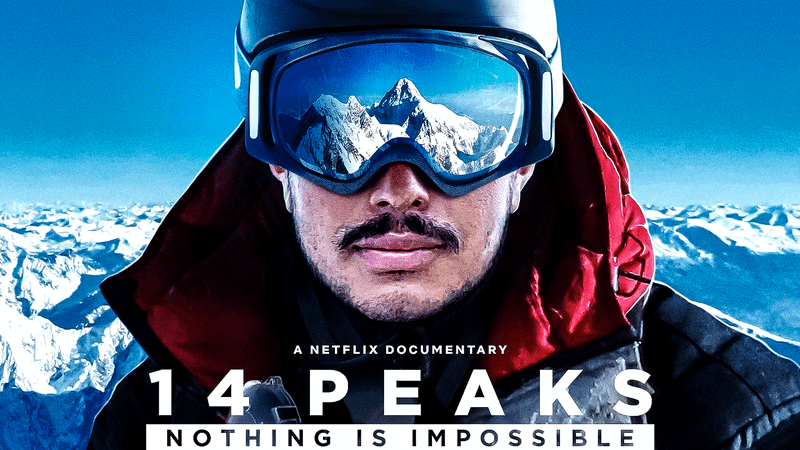
He’s famed for having summited each of the world’s 14 peaks that reach up over the 8,000 metre mark. He managed that in 2019, in just seven months – the previous record for such an achievement being eight years. The documentary of this feat is well worth watching.
Purja is Nepalese born and an ex-British armed forces soldier. Like many other Nepalese who guide climbers up and down Everest each season, it’s fair to say he’s “built different.”
The one time I visited Pokhara, in Nepal, on an expedition of sorts, was in 2002. While we only casually meandered around the famous tea-trails, rather than scaling vast heights, we still got to see just how hospitable, humble, and strong-as-oxes the local sherpas are. I recall them insisting on carrying our backpacks for us, with each guide squeezing three at a time into a wicker basket, whose strap was then slung around the guide’s forehead.
While we wore durable ankle boots, they were in simple footwear. They always went ahead to set up camp, ensuring a tea urn was at the ready for us, to wash down a round of snacks. We were all suitably exhausted as we turned in each night, leaving them to clean up.
This type of hospitality and kindness exists in many countries, and is often not only driven by the host’s desire to earn fat tips from tourists, but is more deeply rooted in the pride felt about one’s own country, and a desire that visitors will have a special time there.
Purja appears to have epitomised these humble traits and managed, in this lifetime (he turned 43 just eight days ago) to amass a portfolio of climbing that is perhaps unrivalled by anyone in our history. A phenomenal legacy in itself, added to which he also dedicated part of his adult life to the British Army and did more in recent years to raise awareness about the effects of climate change than some governments of the world can claim to have done.
What is it that drives an individual to such accomplishments, I wonder?
I looked into some old interviews he did and it’s quite clear that mindset is a key piece of the puzzle for Purja. He talked about it more than almost anything else. Asked what carried him through the military and onto the mountains, he pointed to the discipline of decision-making under pressure and what he calls simply a “positive mindset.” He’s said that people are largely limited by their own imagination – that if you can’t picture something, you’ll never attempt it, let alone achieve it.
Purja is explicit that his positive mindset isn’t a personality trait he was born with but a skill he built in the military and then deliberately carried into climbing. In that way proving that discipline can be transferred from one arena of life to a completely different one.
His record wasn’t necessarily broken because he had better lungs (although to me it’s also clear that he absolutely did have better lungs than most people) or better gear than anyone, but because he refused to accept that eight years was simply how long the task took. He removed any self-imposed limits on the whole thing and then committed fully, and planned relentlessly.
The other standout facet for me are from the side stories on his challenge, where he was generously trying to support others during his summiting. There were mini rescues of other climbers that he undertook, for example, and he seemed very conscious of trying to stay humble at all times while taking on this gargantuan goal.
Lastly, Purja talks about respecting what you can’t control. He explains he takes zero mountains for granted. Particularly poignant given he said this before setting off for Broad Peak itself.
It’s incredibly sad to read about the events of last Thursday on that mountain. For all the families and friends whose lives have also been altered in the process, and will never be the same, it’s an unfathomable task that they now face.
In that way, the accomplishment of Purja and his colleagues is both inspiring and quite maddening in perhaps equal doses.
However, for anyone attempting anything in their life that feels “challenging”, I think there’s a lot to learn from what people like Purja have demonstrated: which is that extraordinary outcomes are rarely the product of extraordinary luck – they can be, instead, the product of an ordinary decision, repeated with total discipline, until it stops looking ordinary at all.

