Coracle Consulting in Vietnam: Your Next Training Partner

In spite of my recovering Achilles, I managed to get out and about last month and, inside of a week, attended two events in Saigon and one up in Hanoi. As can often happen – when you’re away from your emails and your screen, and actually talking in-person with people – I was confronted with some recurring themes and lessons.

In this case, about leadership and about soft skills.

The first Saigon event was the ASEAN Youth Organization’s Re:City Hackathon: a great weekend, where Vietnamese teenagers and twenty-somethings were tasked with building commercial energy-saving ideas in 24 hours flat. A few days later, I headed to a Eurocham breakfast down the road, where two Hogan Assessments consultants pressed home the importance of workplace leadership and employee skills training. And then, the following morning, up by West Lake in the country’s capital, I listened to various HR specialists at a NordCham session, discussing why good people leave companies and how to remedy this.

At each event I was able to draw on some answers to a question that my company, Coracle Consulting, has been asking over the last 7 years: why is it often so hard for organisations to grow the leaders they already have sitting inside them?

It seems to me that Vietnam’s growth story has been creating more senior roles than there are ready people to fill them. I regularly meet companies who talk about how they promote the person who’s “already doing brilliant at the job”. That’s logical on the face of it, but the two skills aren’t the same, and treating them as one is where a lot of promotions go wrong

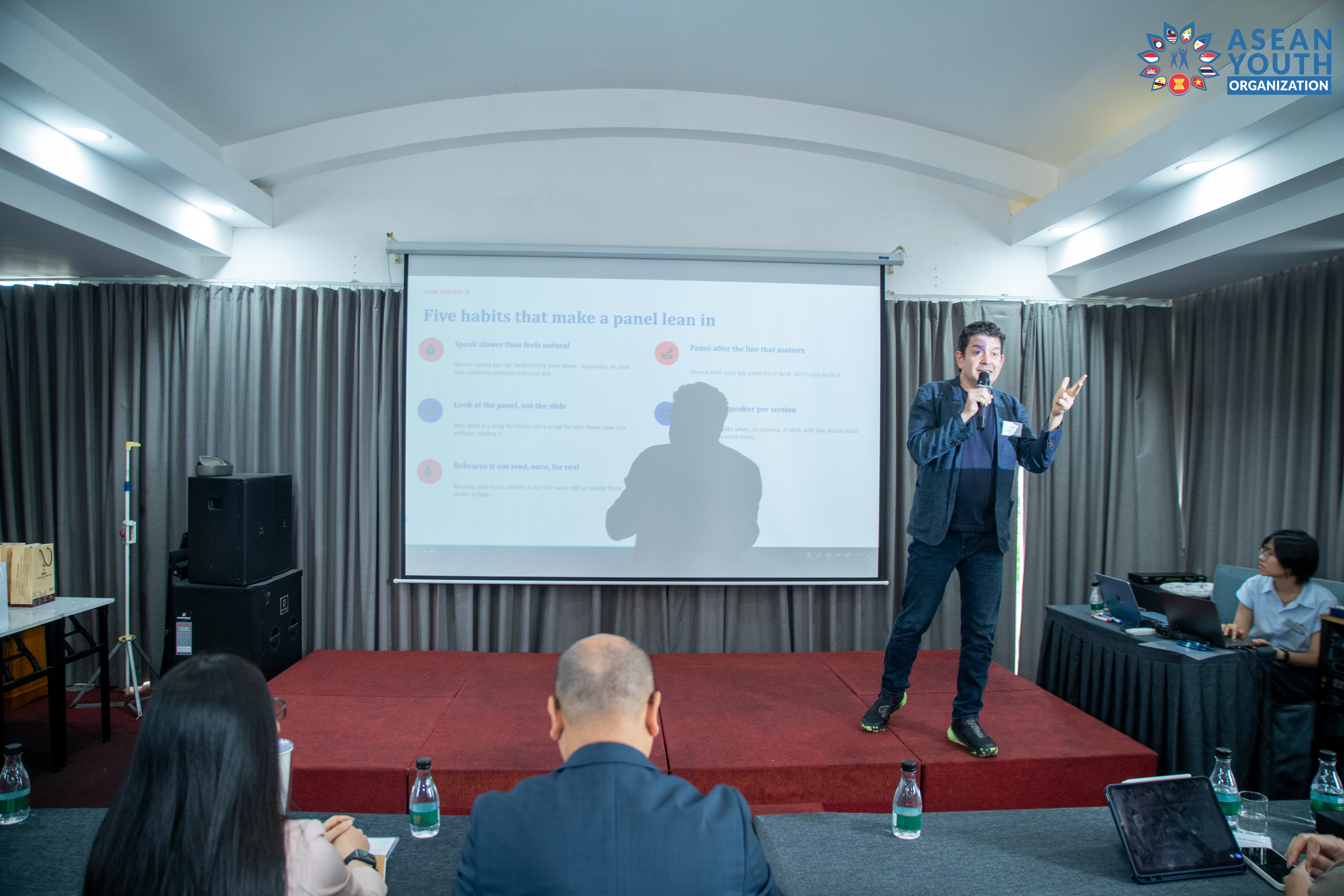
At the AYO Hackathon, where I volunteered as a communications coach and panel judge, there were sixty young people, aged 16 to 24, most of them with zero background in energy. Inside of their 24-hour deadline, many teams gave brilliant and wholly investable pitches to a live audience, financial projections, business models and all. I’m not sure any of the students could boast of being technical experts, but they demonstrated the importance of following a clear process, being open to learning in real time (about things like how to communicate under pressure) before then practicing their ideas and arguments over and again.

To me, funnily enough, some of these “soft-skills” are what newly promoted managers are never taught, and are just expected to somehow already have. Before promotion, your job is largely to be good at your own work. After promotion, your job can be to make other people good at theirs. You need to delegate, give feedback, have the awkward conversations, present upward, make calls with half the information you’d like, and try to get buy-in from people who don’t report to you.

All these things require skills that are not often taught in schools, nor in the workplace.

Which was more or less the theme at the Eurocham breakfast. The key note speakers, Allison Howell and Krista Pederson, walked through the (sizeable) gap between what employees say they want from their leaders and what leaders actually think they’re delivering. They also had smart things to say about AI’s disruption of leadership work, however the leadership gap was the line that stuck with me. Technical or positional authority doesn’t automatically come with the interpersonal instincts people are actually looking for.

And lastly, as speakers from ABB and Contagi explained, the very next day up in Hanoi, if you don’t fix these pieces, then people leave. The consensus in that room, more or less, was that this problem isn’t going away. If anything, it’s becoming more urgent as competition for good people intensifies.

In a recent Vietnam Enterprise Workforce Capability Readiness report, apparently 76% of companies surveyed now say they’re planning to invest more in leadership capability. Retention, succession and leadership capability get treated as three separate line items in most HR strategies. But having sat in those three rooms in one week, I’d argue all three are really just part of the same problem.

I’m not suggesting that any of this requires waiting for someone to fail as a manager before doing anything about it. Communication, presentation, emotional intelligence, negotiation, problem-solving, personal accountability – these can all be built into someone’s development from the get-go and long before they get promoted. Technical skills still matters enormously, and none of this is an argument for replacing it with “soft skills” but it’s an argument, in fact, for adding a second layer on top of it as someone’s responsibilities widen.

Vietnam has no shortage of talented, ambitious people. The opportunity isn’t attracting more of them from outside, I believe it’s helping the ones already inside your organisation grow into the roles you’ll need filled next year.

If your organisation is wrestling with any of this, then drop Coracle a line, as these issues are exactly what we’re spending our time at working on. Get in touch to share your experiences, or for a free consultation on how we could support your situation.

timbishop@coracleconsulting.net / http://www.coracleconsulting.net

Rewinding with a Bic pen

For anyone who remembers cataloguing their home collection of VHS videos, or the precise tension of a Bic pen wedged into a cassette tape, rewinding a mix you’d recorded straight from the radio (god forbid you’d bumped the bed while recording, or ruined your masterpiece with an accidental cough).

For anyone who remembers when a five pound note was a big deal, or, when negotiating, as a teenager, with your parents to use the one landline in the house.

If you are nodding to any of these throwbacks, this is a safe space, read on.

Technology has evolved in ways I can barely comprehend, and yet I’m not convinced life is truly ‘better’ now than 50 years ago, the year I was born.

I’m English, and was born into a middle class family. Off to a good start, you could argue.

Whilst my work in international development to date has offered me many alternative perspectives, my childhood was framed within the comfortable trappings of a loving family, with two parents who worked hard and put my brother and I before most other things (although not quite above making us wear seatbelts at 3am on the way home from a boozy party when Dad was, let’s not pretend otherwise, two sandwiches short of a picnic and over the legal limit).

Life was different back then.

I’ve written before about the fortunate timing of my arrival to this world, coming as it did on the back of generations and generations of families who’d operated more in the “children should be seen but not heard” camp.

I, on the other hand, was given a voice by my parents, and better still given the confidence to use it at home, at school, and in public. A freedom and a privilege that still bedazzles me. In the UK, at least, and in my household (that’s the only reference point I can speak to) the mid 70’s were a pivotal moment for kids.

Rose-tinted this introduction might be, let me get back to technology…

“Tech” when I was an adolescent, was having a fourth TV channel – Channel 4, no less – which curated hip new programmes for young people. Tech was recording WWF wrestling and American football matches overnight, and then watching them at 6am, with my brother and a large bowl of Cornflakes before school.

This, this was living.

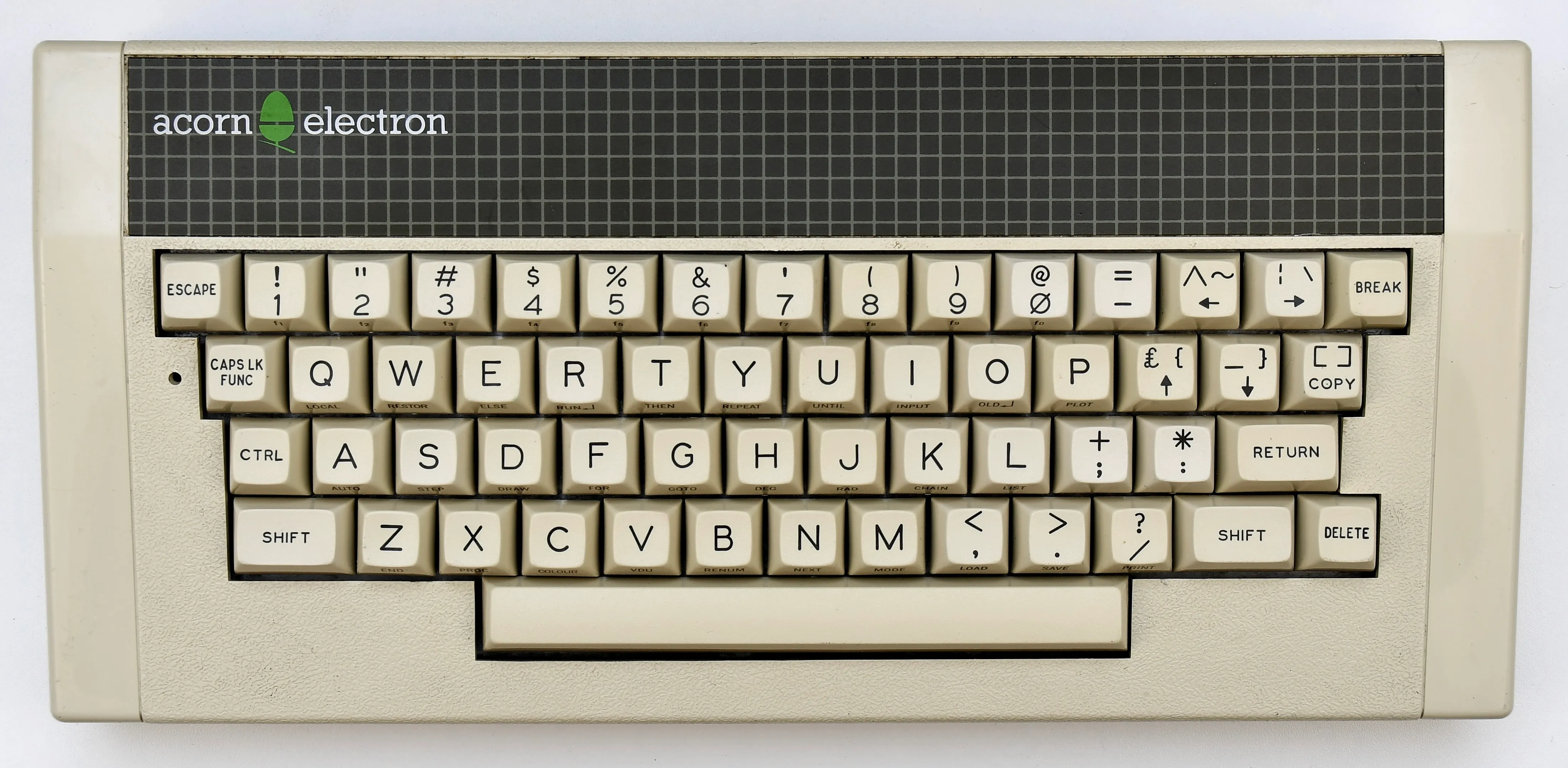
The very snazzy Acorn Electron, circa The 80s.

Just about the same time I got excited at the prospect of printing out movie names on a “tape gun,” and sticking these onto our VHS tapes (housed in a fake-mahogany drawer underneath a bulky television that occupied one third of our “TV” room) we acquired our first computer, an Acorn Electron.

This would have been at some point towards the end of the 1980’s. We were elated at the time. A brave new world, indeed.

Quality time spent playing Pac-Man on this computer was the sum total of my tech experience until I was fairly deep into my 20’s. All throughout university we wrote essays by hand and, aside from nights spent with my friends playing Street Fighter and Mario Karts, I was too wrapped up in parties and sports to be bothered with much else (although I do still have fond memories of rocking out to Culture Club on my Sony Walkman, on holiday in the Canaries when I was about fourteen years old. Does that count for anything?)

When I then left the UK to spend a year teaching in a village in Uganda, around 1996, I used up all my spare time writing and receiving dozens of letters each week. There was not a digital device within a hundred of miles.

I recall utilising the poste restante services of several post offices in Zanzibar and Mombasa during the holidays when I went travelling (this was where someone could mail you a letter to pick up from town to town, as you moved around). The build up of bubbling excitement on each occasion, asking if there was any mail for you in a far off African town, was palpable.

It was a fax machine that we used in Kampala back then, to communicate home. Just as it was a fax machine I then used to send out marketing posters to customers, during the first year of my inaugural “real job” working at World Challenge Expeditions, in London, in 1997. Our office had one computer, and we had to share it between twenty six staff.

In this same job I was given a car and, ultimately, an early Motorola phone. This was exciting, although I typically used it when I was driving, lodged between my ear and shoulder, a road atlas on my lap, whilst chowing down a service station sandwich (not cool, kids – do not do this.)

If these images have sparked memories for you then perhaps, like me, you feel rather luddite-y around your children, or around your younger colleagues at work, any time something to do with technology, coding, or gigabytes comes up in conversation?

I feel quite border-line on all this. On the one hand, I find myself actively trying hard to email, text, blog, build myself a website, and so on, whilst simultaneously lamenting a time now long gone, when I’d sit fixated by a friend’s hand-written letter to me from his or her respective university, catching me up to speed on their course, their love life, or their well-being.

We didn’t have any actual conversations back then about “well-being”. Nor many therapists or online-specialists to organise our thoughts, or to promote journaling, meditation or the merits of a decent granola. We connected through the compassion that can be found in words, and in the act of letter-writing or (and also a dying art-form, it seems to me) just calling someone for a chat.

My first unwittingly taken ‘selfie’ in the summer of 1995. Ahead of my time, I was.

I sound one hundred years old just saying all this, but I do hark for these simpler times.

My daughters connect a lot with friends via their phones. This is their time, and this is their way of doing what I did. And so it makes me very happy, intuitively, to imagine (and hope) that they are having an equally fulfilling childhood, as I know I did, when it comes to socialising. I’ll never really know, and it’s too much of a challenge to compare and contrast.

As ex-pats, living in the tropics, there are obviously lots of differences to growing up in rural England. However, I’ve long been at peace with the fact that my girls’ formative years are theirs, and not mine to live through vicariously. That they have social media in their lives is both good and bad, just as my brother and I had the television to keep us stimulated.

Social media is addictive, as is TV. But social media is also a platform for connection that, for now, offers so much more interaction and options, that I believe it can only be a good piece of progress, and I’m not fighting it. There are downsides to it, and I feel these will only become more pronounced, and how we all communicate will pivot once more towards something else. Right now, I think it’s fair to ask: are we all more connected, or just more plugged in?

Thirty years from now, my daughters will likely ruminate, as I am now, about the younger generation, and I can only imagine what might manifest then and how outdated AI will be by then.

Instead, as a holding pattern for me right now, I write letters and cards, when I can. I’ve been reading more poetry of late. I’ve been writing more thoughts down, the old fashioned way, and also stopping more to engage properly in what is going on around me.

All of which feels so familiar, it is as if hardly anything has changed since I was half the age I am now. It’s all still there, perfectly accessible.

Being more aware, and less dependent on your phone, is not unique, of course. Many people don’t have smart phones, and some are off the social media “grid” completely however technology is exponentially growing at a rate that I, for one, am failing to keep up with.

I’ll keep trying, but the truth is that I don’t think any technology can replace, for me, just how the trill of a phone ringing, or the metal clunk of a letter-box flapping, for those few seconds, used to made my heart skip a beat.